Chocolate Chip Cookie Skillet | No Refined Sugar
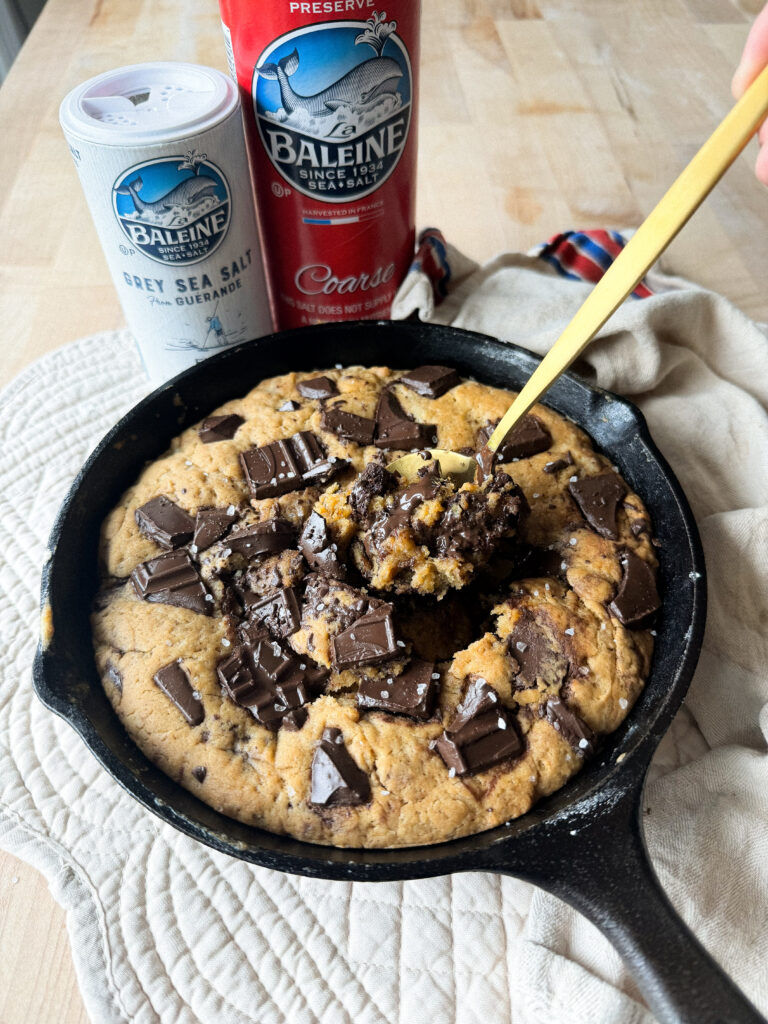
The Dessert That Requires Almost No Effort and Zero Apology
A skillet cookie occupies a very specific and irreplaceable niche in the dessert world. It is not a cookie you share individually. It is not a cake you slice carefully. It is the thing you put in the center of the table with a spoon and a carton of ice cream and let people deal with however they see fit. It is dessert as a communal event, and it is the kind of thing that makes a regular Tuesday night feel like it was worth staying home for.
This version skips the refined sugar entirely, which is not a compromise and should not be treated as one. Coconut sugar and maple syrup together produce a cookie skillet with a deeper, more complex sweetness than granulated sugar could provide, with a faint caramel quality from the coconut sugar and a warmth from the maple that makes the dark chocolate taste richer and more present.

Coconut Sugar and Maple Syrup Are Not Substitutes, They Are Upgrades
Coconut sugar is made from the sap of coconut palm flowers and retains trace minerals and a lower glycemic index than refined white sugar, but its most important quality in this recipe is its flavor. Where granulated sugar provides clean, neutral sweetness, coconut sugar brings a molasses-like depth and a subtle caramel quality that reads immediately in the finished cookie as something more interesting than standard. It is drier than brown sugar but behaves similarly in a dough, adding moisture retention alongside its sweetness.
The maple syrup adds the liquid fat-soluble sweetness that keeps the dough cohesive and gives the skillet cookie its soft, slightly fudgy center. Together the two sweeteners create a flavor profile that is genuinely better suited to dark chocolate than white sugar is, because both have enough character to match the bitterness of the chocolate rather than just sweetening against it.
Cast Iron Does the Work
Melting the butter directly in the cast iron skillet before building the dough in the same pan is the move that makes this recipe as fast as it is. One vessel, start to finish. The cast iron retains and distributes heat evenly in a way that a standard baking pan cannot, which produces a skillet cookie with a deeply set, slightly crisp bottom and sides while the center stays soft and molten and the top turns a rich, even golden brown.
The critical detail at this stage is letting the melted butter cool for ten minutes before anything else goes into the skillet. Butter that is still hot enough to cook an egg will scramble the egg the moment it makes contact, and a scrambled egg in a cookie dough produces a cookie with an uneven, slightly rubbery texture. Ten minutes of cooling at room temperature brings the butter to a temperature the egg can tolerate, and everything that follows goes in smoothly.
Dark Chocolate in Two Applications
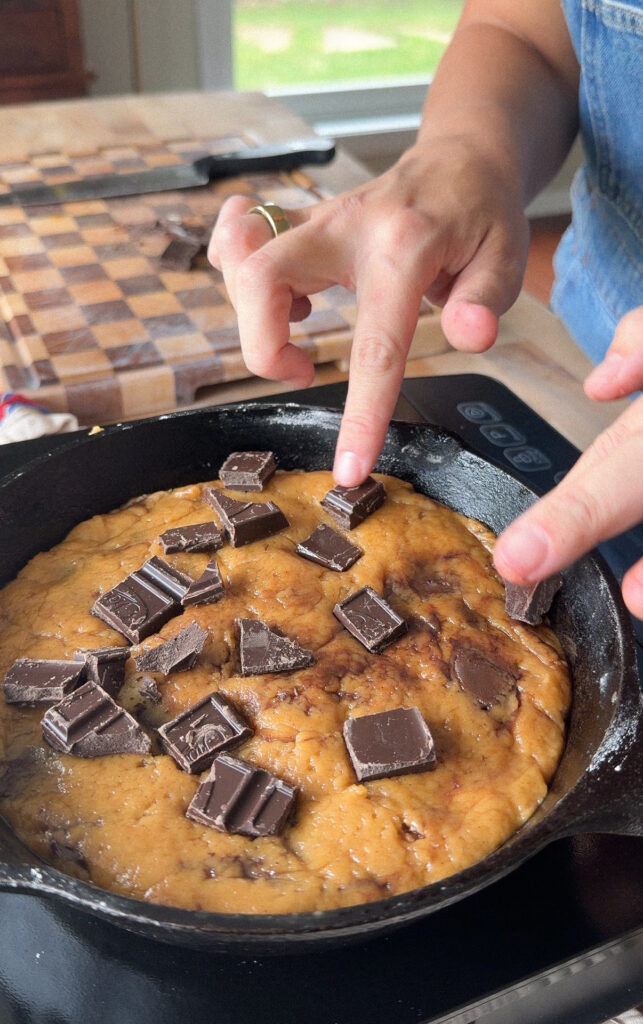
Folding three quarters of the chopped dark chocolate into the dough and reserving the remaining quarter for the top is the technique that gives this skillet cookie two distinct chocolate experiences in every bite. The chocolate folded into the dough melts partially during baking, creating small pools and streaks of chocolate distributed throughout the interior of the cookie. The pieces pressed into the top stay more intact and develop those slightly crisp, caramelized edges that make a visible chocolate chunk so satisfying to bite through.
Working quickly when folding the chocolate in keeps the pieces from melting entirely into the dough before the skillet goes into the oven. The butter in the dough is warm enough that prolonged contact with the chocolate will begin to melt it, which changes the texture of the finished cookie.
Flaky Salt at the End Is the Finish This Cookie Needs
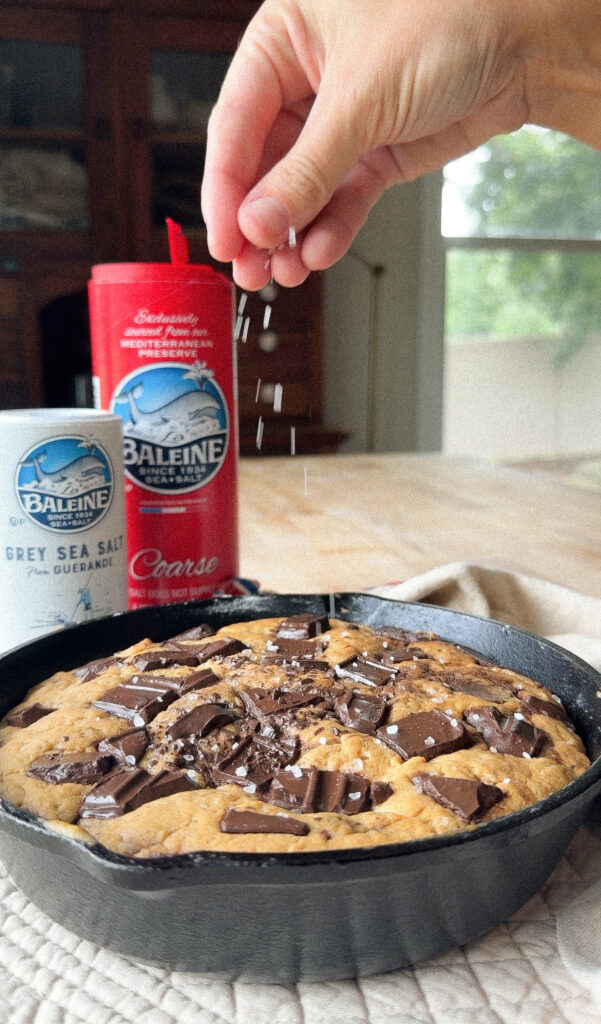
Coarse salt pressed onto the top of the dough before the skillet goes into the oven does something specific during baking that flaky salt added afterward cannot. The salt crystals partially dissolve into the surface of the cookie as it bakes, seasoning the top layer of the dough and creating small pockets of contrast throughout the golden crust. A pinch of extra flaky salt added right after the skillet comes out of the oven catches the residual heat and adheres to the surface, adding texture and a final hit of salinity that cuts through the sweetness of the maple and coconut sugar in a way that makes the whole thing taste finished.
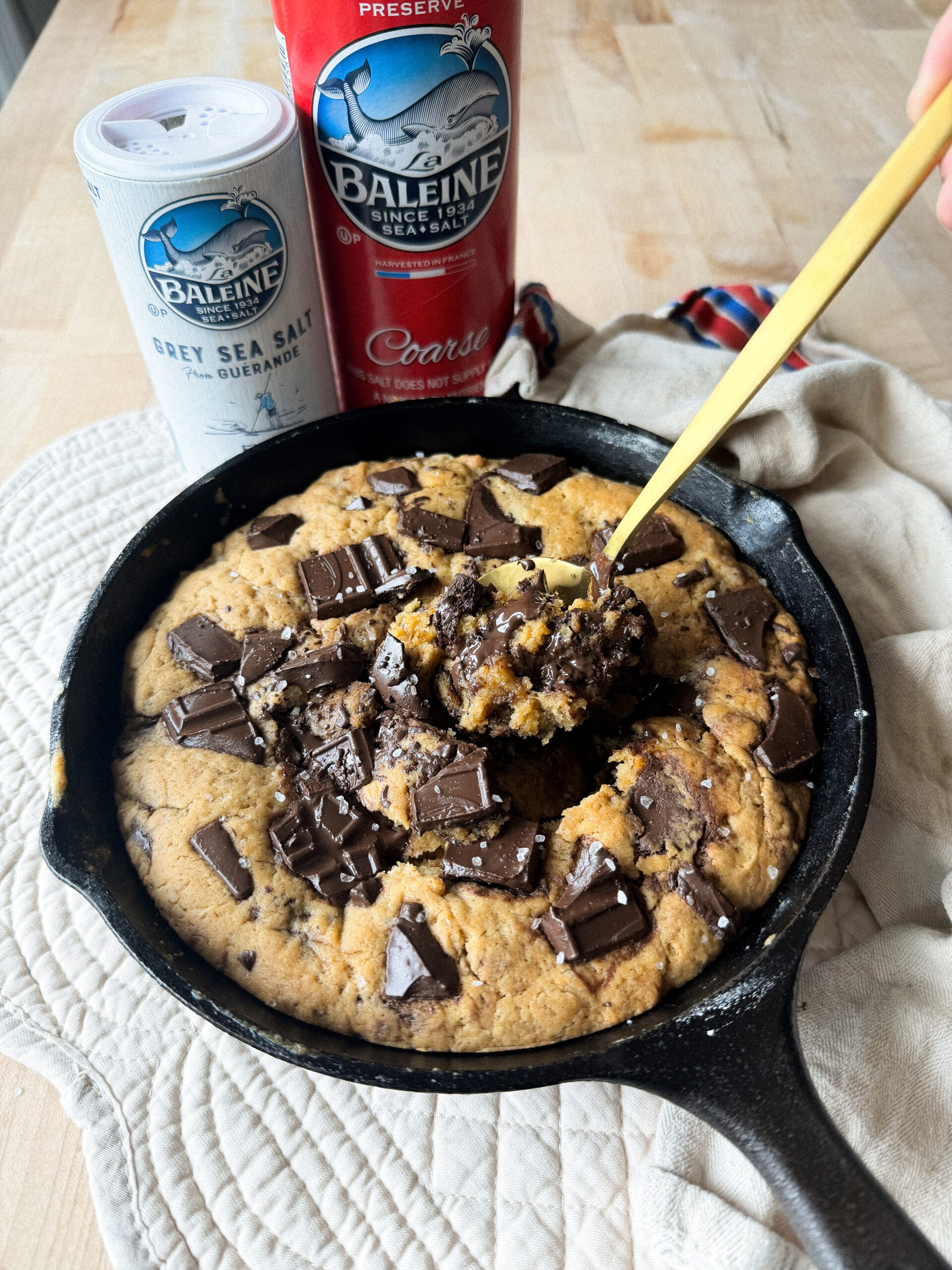
The ice cream is not optional in spirit. A warm skillet cookie served with a cold scoop on top creates the contrast of temperatures and textures that makes this dessert more than the sum of its parts.
Chocolate Chip Cookie Skillet
Ingredients
- 8 tbsp Butter (1 stick)
- ¼ cup Coconut Sugar
- ¼ cup Maple Syrup
- 1 Egg
- 2 tsp Vanilla Bean Paste (or extract)
- 1 tsp Salt
- 1½ cups All Purpose Flour
- 1 tsp Baking Soda
- 1 cup Chopped Dark Chocolate (or chocolate chips)
- Coarse/flaky salt for topping
Instructions
- Preheat the oven to 350°F. In a 6-8” cast iron skillet, melt the butter. Immediately remove the melted butter from the heat and allot it to cool for 10 minutes. This is essential to keep the egg from scrambling.
- Add the coconut sugar and maple syrup, stirring to combine. Then, add the egg, vanilla, and salt. Stir to combine.
- Add the flour and baking soda. Stir until the flour is incorporated. Fold in the 3/4 of the chocolate, working quickly to keep the chocolate from melting into the dough. Press the dough into the skillet and top with the remaining chocolate and a bit of coarse salt.
- Bake for 25 minutes, or until the top of the cookie is a deep golden color and the center of the cookie is fully set.
- Serve warm! This is best enjoyed with a scoop of ice cream on top.