Same Day Baguettes
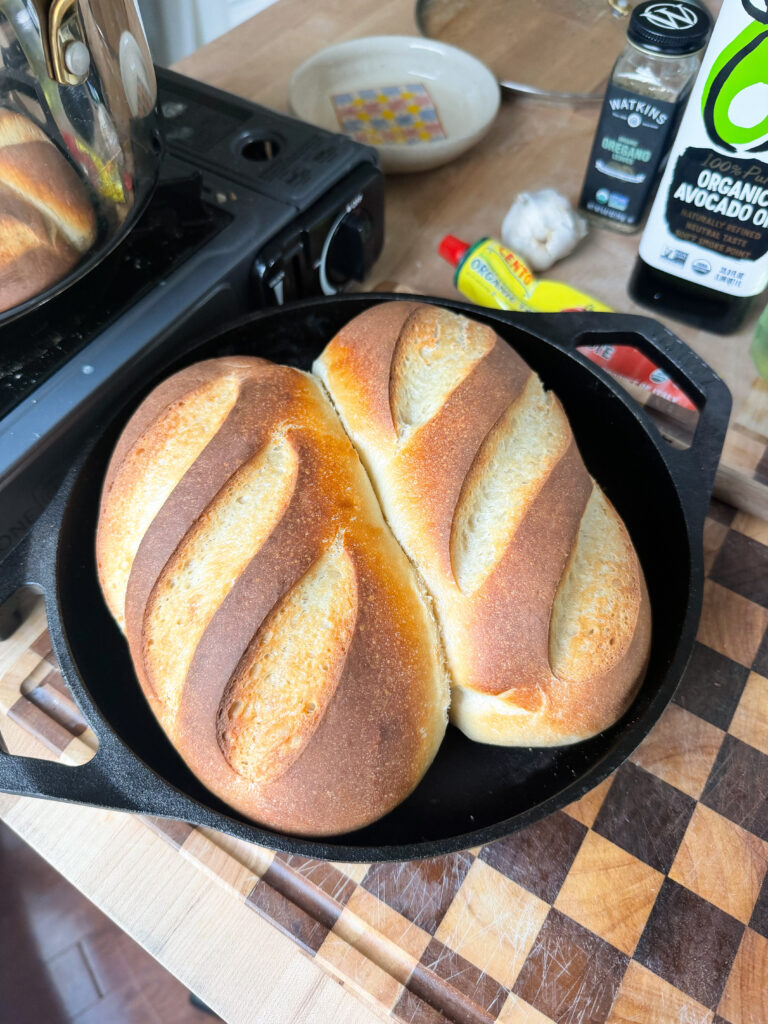
The Baguette That Fits Into a Real Day
The quick homemade baguettes on this blog use a baking steel and lava rocks to replicate the steam injection of a professional deck oven, and they are excellent for exactly that reason. This version takes a different approach entirely, one that requires no special equipment beyond a Dutch oven, and produces a baguette with its own distinct character. A crackling, deeply golden crust from the trapped steam of the covered bake. An open, airy crumb that pulls apart in those satisfying irregular pieces. A flavor that is clean and slightly sweet from the honey and olive oil in the dough.
It fits into a real day. Mix it in the morning, shape it after lunch, pull it from the oven in the afternoon. Both mini loaves are done before dinner needs to start, and they are the kind of bread that makes dinner feel like a more considered event than it otherwise would.
Mixing and Kneading, Both
This dough is mixed in the stand mixer and then finished by hand on a clean surface, and both stages are contributing something different. Ten minutes in the mixer builds the initial gluten structure and distributes all of the ingredients evenly through the dough. Five minutes of hand kneading after that develops the surface tension and smoothness that machine mixing alone doesn’t fully achieve, producing a dough that shapes cleanly and holds its form during the second rise.
The dough should be smooth and slightly tacky by the end of kneading, but not sticky enough to require additional flour. If it is sticking aggressively to the surface and your hands, a very small amount of extra flour can be worked in, but adding too much at this stage tightens the crumb and produces a denser loaf than this recipe is designed for.
The Dutch Oven Does What the Lava Rocks Do
Placing the shaped baguettes inside a preheated Dutch oven and baking covered for the first twenty minutes creates the same steam environment that the lava rock method produces in the quick baguette recipe, just through a different mechanism. The moisture released by the dough as it bakes is trapped inside the covered Dutch oven rather than escaping into the larger oven cavity, keeping the surface of the dough soft and pliable during the critical first phase of baking when the loaf is still expanding.
The lid comes off at the twenty-minute mark and the temperature drops to 425°F for the final ten minutes, which is when the crust develops its deep golden color and its characteristic crackle. That two-stage bake, covered then uncovered, is the entire technique behind a Dutch oven bread with a proper crust, and it works just as reliably for a baguette as it does for a round sourdough loaf.
Scoring Before the Oven, Not After the Rise
Three diagonal slashes down each loaf scored with a sharp blade immediately before the baguettes go into the Dutch oven is the step that controls where the bread expands during baking. Without scoring, the loaf finds its own path of least resistance and bursts unpredictably at the seams or along the sides, producing an uneven shape and a crust that doesn’t develop the characteristic raised ridges on either side of each slash.
A sharp blade drawn quickly and confidently at a shallow angle produces a clean, deep score that opens during baking into the distinctive baguette pattern. A dull blade drags the surface of the dough and compresses it rather than cutting cleanly through, which prevents the score from opening properly in the oven. A razor blade or a dedicated bread lame is the right tool. A serrated knife drawn quickly works in a pinch.
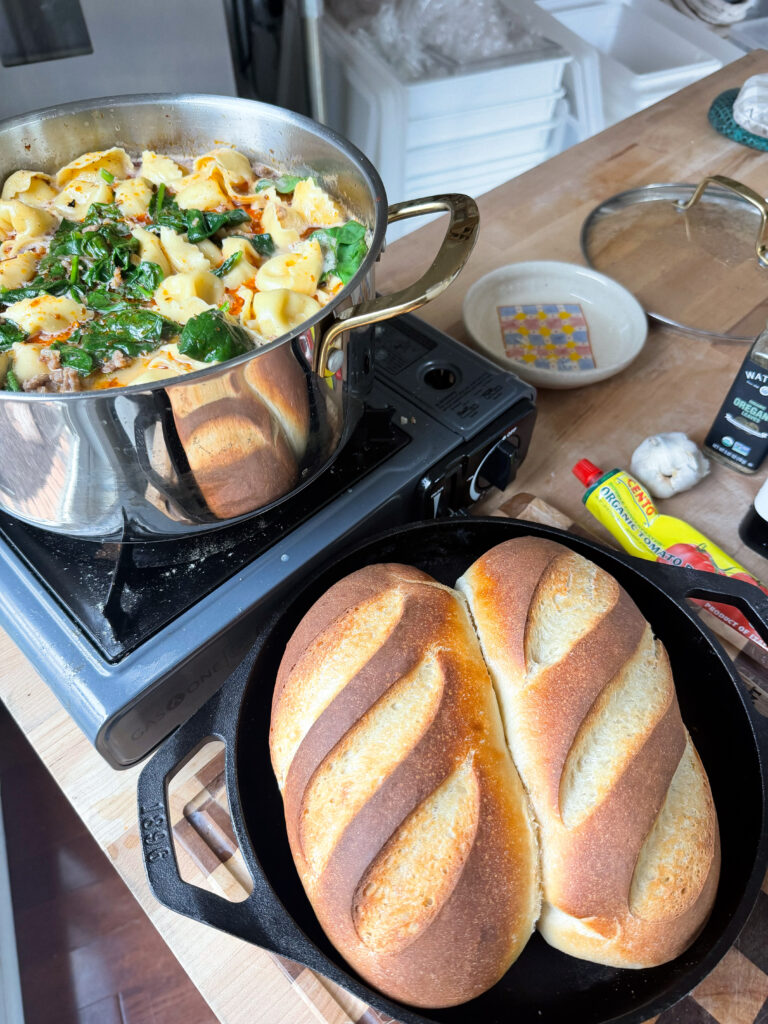
Thirty Minutes of Cooling Is the Last Instruction Worth Following
A baguette pulled from the oven and immediately cut is a baguette with a gummy, compressed crumb that doesn’t reflect what was actually baked. The interior of the loaf is still finishing its structural set during those first thirty minutes on the wire rack, steam releasing through the crust and the crumb firming into its final texture. A baguette that has cooled completely pulls apart cleanly and reveals the open, irregular crumb that the whole process was working toward.
It is also when the crust is at its loudest, crackling as it cools against the cooler air of the kitchen. That sound is the sign that the baguette did what it was supposed to do.
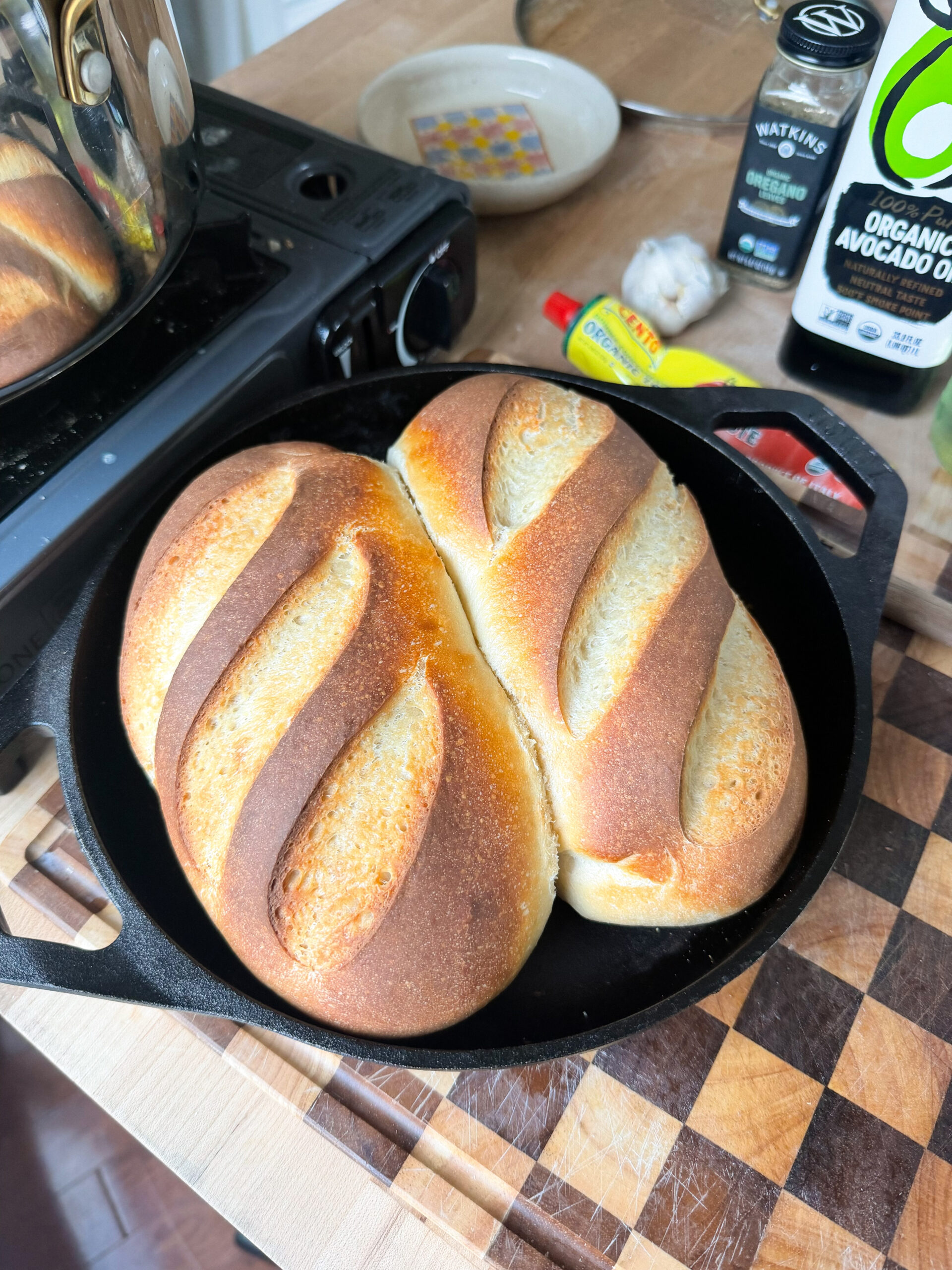
Same Day Baguettes
Ingredients
- 500 g All Purpose Flour
- 340 g Warm Milk
- 6 g Active Dry Yeast
- 20 g Honey
- 30 g Olive Oil
- 10 g Salt
Instructions
- Add the yeast and honey to the warm milk. Set it aside to let the yeast bloom for 5 minutes.
- Meanwhile, add the flour, oil, and salt to the bowl of a stand mixer with the dough hook attached. Once the yeast has bloomed, add the milk mixture to the flour.
- Mix on medium/low speed for 10 minutes, then knead by hand on a clean surface for 5 minutes. The dough should be smooth, and you should not need extra flour while kneading.
- Place the dough in a large bowl, cover it, and allow it to rise until it’s doubled in size, rough 1.5-2 hours.
- Preheat the oven to 500°F with the dutch oven inside. Once the dough is fully proofed, dump the dough onto a shaping surface. Separate the dough into two even pieces. Press each piece of dough into a 6” rectangular/oval shape. Starting on one of the long sides, roll the dough into a small baguette shape. Seal the ends and the seam to ensure the bread maintains its shape.
- Place both shaped loaves close together onto a piece of parchment paper. Cover with plastic wrap and allow them to rise for 30 minutes while the oven preheats.
- After the second rise, score the loaves with a sharp blade, making 3 uniform slashes diagonally down the loaves.
- Once the loaves are scored, remove the hot dutch oven from oven. Place the mini baguettes on the parchment paper into the dutch oven.
- Cover with the lid, and bake at 500°F for 20 minutes. Then, remove the lid and lower the temperature to 425°F. Bake for an additional 10 minutes, or until the crust has reached a deep golden color.
- Cool for at least 30 minutes before serving.