Sweet Corn Cake
Not Quite Cornbread, Not Quite Cake
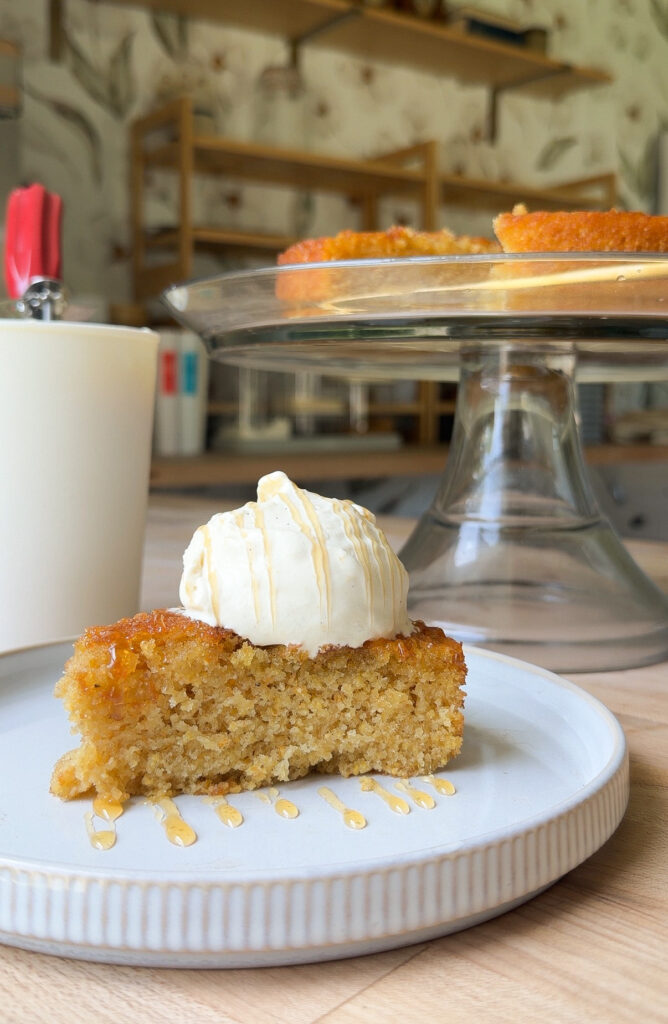
There is a category of baked good that exists in the space between two better-known things and is better than both of them for it. This sweet corn cake lives exactly there. It has the golden color and the faint grittiness of good cornbread, but the crumb is tender and moist in a way that cornbread rarely achieves. It has the sweetness and the structure of a simple cake, but it is grounded by the cornmeal in a way that keeps it from being precious or fussy.
What finishes it is the honey butter brushed over the top while the cake is still warm enough to absorb it. The butter soaks in and the honey pools in the surface and sets into a faint, golden glaze that makes every slice look like it just came out of a bakery case and taste like someone’s grandmother made it specifically for you.
Cornmeal and Flour in Equal Parts
The fifty-fifty split between fine yellow cornmeal and all-purpose flour is what gives this cake its distinct character without making it feel like cornbread that got confused about what it wanted to be. All-purpose flour provides the gluten structure that holds the cake together and keeps the crumb from crumbling on the fork. The cornmeal brings texture, color, and that unmistakable corn flavor that makes this cake immediately different from anything made with flour alone.
Fine cornmeal rather than medium or coarse is the specification that matters most here. Coarser grinds produce a grittier texture throughout the crumb that reads more as cornbread and less as cake. Fine cornmeal integrates into the batter more completely, leaving just enough texture to remind you it’s there without dominating every bite.
Two Sugars Are Better Than One
Brown sugar and granulated sugar together is a combination that shows up throughout this blog for the same reason every time: they are not interchangeable and they are better together than either one alone. Granulated sugar gives the cake its structure and contributes a clean, neutral sweetness. Brown sugar adds moisture and a deep, molasses-forward warmth that makes the corn and vanilla flavors more rounded and complex than they would be against a purely white sugar backdrop.
The eggs whisked with both sugars until light and frothy before any other wet ingredient goes in is the step that builds the cake’s airy, even crumb. It takes an extra minute and produces a noticeably lighter texture in the finished slice.
Three Fats, All Working
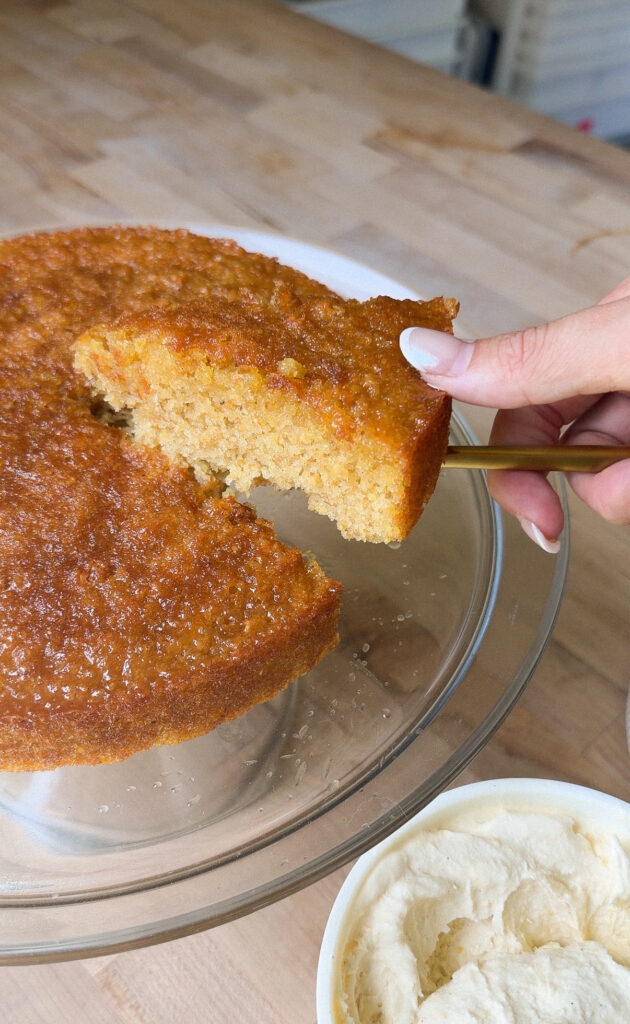
Avocado oil, Greek yogurt, and melted butter appear in the batter and the glaze respectively, and each one is doing a different job. The avocado oil keeps the crumb moist at room temperature in the way that liquid fats reliably do, without adding any competing flavor. The Greek yogurt adds a creamy tang that enriches the batter and keeps it from being one-dimensional, while also contributing to the tender crumb through its acidity activating the leavening. And the melted butter in the honey glaze adds richness and flavor to the exterior of the cake in the brief window after baking when the warm crumb is still porous enough to absorb it.
All three fats together produce a cake that stays soft the next day and the day after, which makes it as good for a quiet weekday morning sliced and eaten with coffee as it is served warm from the oven on the day it’s baked.
The Honey Butter Glaze Is Applied While the Cake Is Still Warm
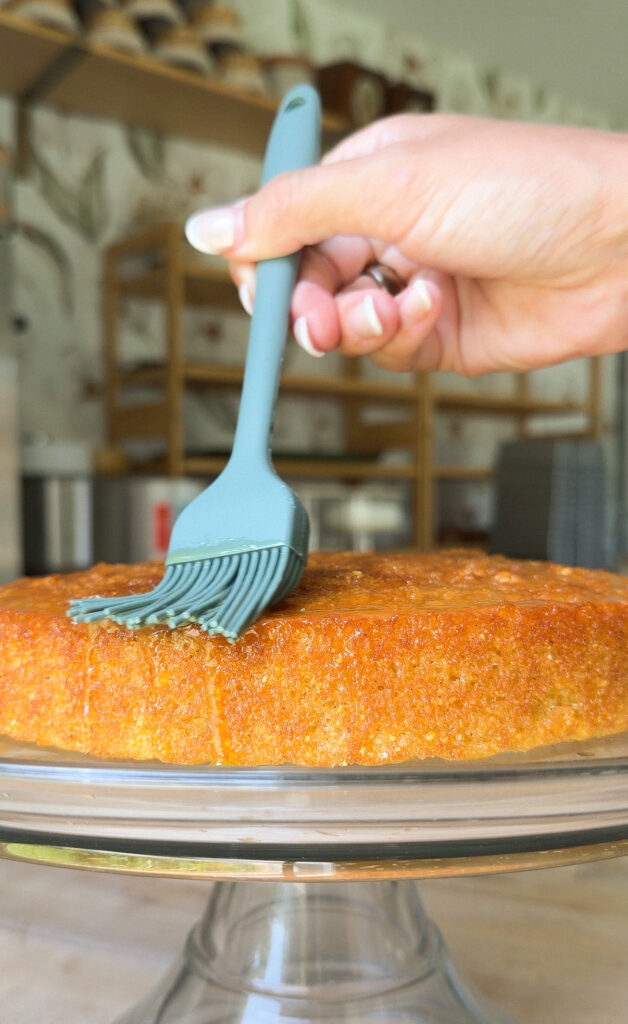
The timing of the glaze is the detail that makes this step work the way it should. A fully cooled cake has a set surface that the honey and butter sit on top of rather than absorbing into. A warm cake fresh from the oven still has an open, porous crumb structure, and the melted butter and honey brushed over the top disappear into the surface within seconds, infusing the top layer of the cake with richness and sweetness rather than coating it.
The result is a top that is faintly glossy and slightly more golden than the rest of the cake, soft enough to yield immediately under a fork and carrying a concentrated hit of honey in every bite from the top down. It does not harden into a crust or compete with the crumb beneath it. It becomes part of the cake.
One Bowl, One Pan, One Hour
This is the kind of recipe worth having for the moments when you want something genuinely good without the commitment of a layered cake or a long method. The dry ingredients come together in one bowl and the wet in another, they’re folded together once until just combined, and the batter goes straight into a greased pan. Thirty to thirty-five minutes later, the honey butter goes on and the cake is done.
It works equally well as a dessert with a spoonful of the maple whipped cream from the vanilla bean cake recipe on this blog, as a sweet afternoon snack, or as the kind of thing that disappears from the counter in slices over the course of a day without any single person claiming responsibility.
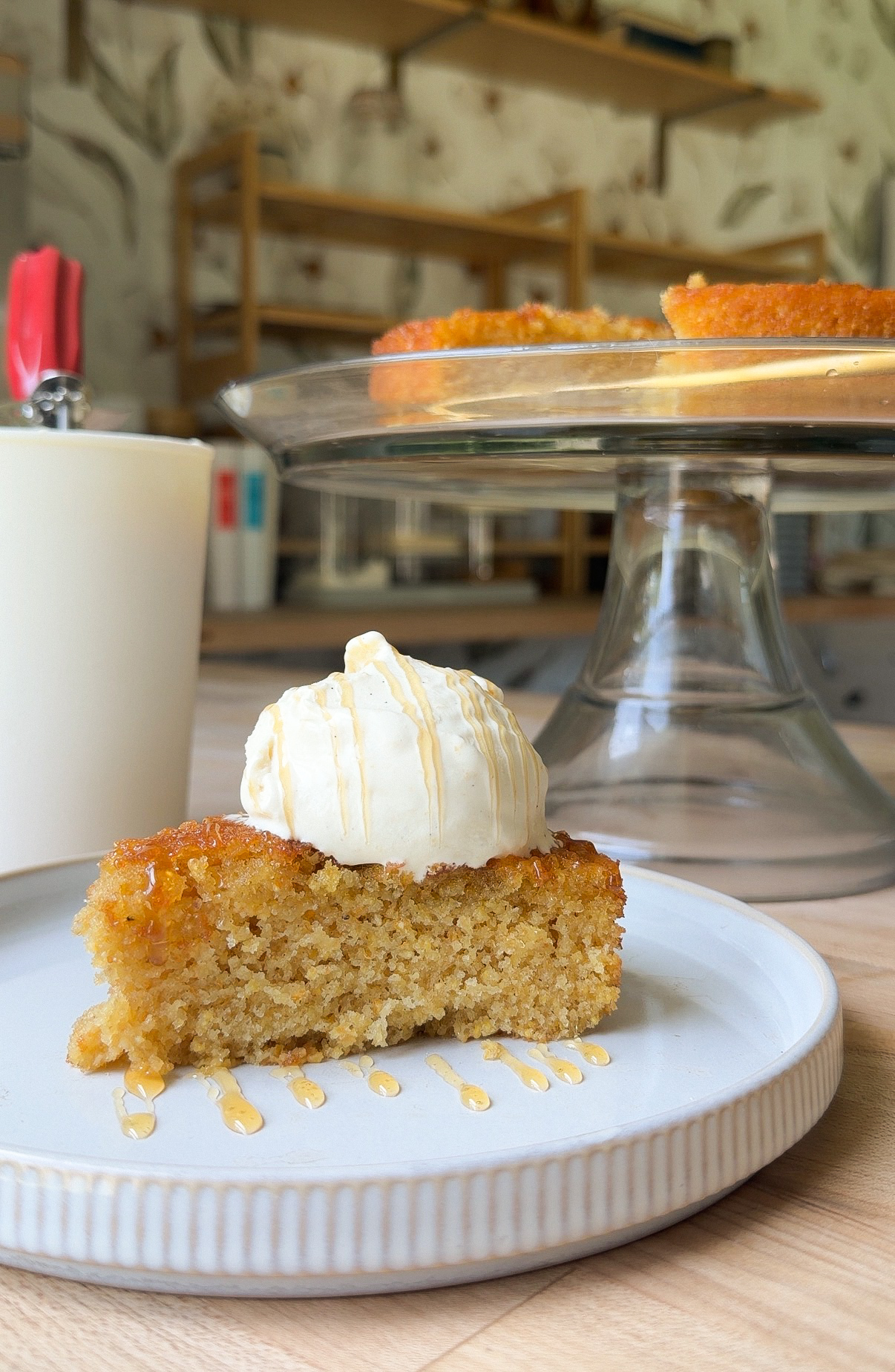
Sweet Corn Cake
Ingredients
- 125 g All-Purpose Flour
- 125 g Fine Yellow Cornmeal
- 150 g Granulated Sugar
- 50 g Brown Sugar
- 2 tsp Baking Powder
- ½ tsp Baking Soda
- ½ tsp Salt
- 2 Eggs (room temperature)
- 250 g Whole Milk (room temperature)
- 50 g Plain Greek Yogurt (room temperature)
- 75 g Avocado Oil
- 10 g Vanilla Bean Paste (or extract)
- 56 g Melted Butter (4 tbsp)
- 80 g Honey
Instructions
- Preheat the oven to 350°F. Add the flour, cornmeal, baking powder, baking soda, and salt to a large bowl. Whisk to combine.
- In a medium sized bowl, add the sugar, brown sugar, and eggs. Whisk until light and frothy, then add the milk, greek yogurt, avocado oil, and vanilla bean paste. Whisk again until smooth.
- Pour the wet ingredients into the dry ingredients, and fold it together until the flour mixture has been absorbed. Do not over mix.
- Pour the batter into a greased/parchment-lined 10” cake pan. Bake for 30-35 minutes, until the center has set and the top is golden brown.
- After the cake is out of the oven, mix together the melted butter and honey. Brush the honey mixture over the warm cake, and enjoy!