Long Fermented Vanilla Bean Cake
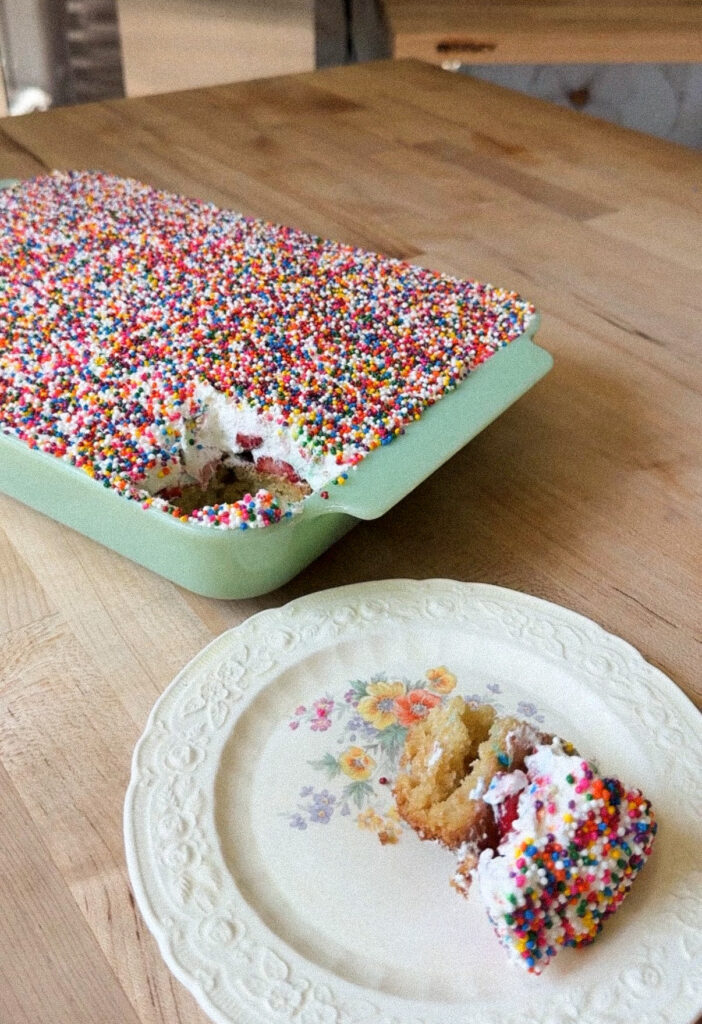
Bringing the classic birthday cake to the next level
If you have already made the long-fermented carrot cake on this blog, you know what overnight fermentation does to a baked good. It is not a shortcut dressed up as a technique. It is the actual thing, the process that turns a cake from something pleasant into something that tastes considered and alive in a way that same-day baking cannot replicate.
This vanilla bean cake is the quieter sibling of that carrot cake. Where the carrot cake is warm and spiced and full of things to notice, this one is restrained and clean. Vanilla, butter-tender crumb, a whipped cream frosting sweetened with maple syrup. It is the kind of cake that does not need to announce itself to make an impression, the kind that people take a second slice of and then sit with for a moment trying to figure out what makes it so good.
The answer is time, separated eggs, and a starter that has been given a full day to work.
What Separating the Eggs Does to a Cake
Most cake recipes treat eggs as a single ingredient. This one splits them into two separate jobs, and the difference in the finished crumb is unmistakable.
The yolks go in with the sugar first, beaten until the mixture is pale and thick and ribbons off the whisk. They contribute richness and fat and help build the emulsified base that gives the cake its structure. The whites are whipped separately to stiff peaks and folded in at the very end, after the fermented flour and buttermilk and yogurt are already combined. They introduce air into a batter that already has depth and body, lifting the whole thing into something almost soufflé-like in its lightness.
Folding the whites in gently is the step that requires the most care in this recipe. A heavy hand deflates what took several minutes to build. A slow, deliberate fold from the bottom of the bowl upward, rotating as you go, keeps the airiness intact and produces a batter that bakes up with a crumb that is simultaneously tender and light in a way that neither technique alone achieves.
Vanilla Bean Paste, Not Extract
Vanilla extract and vanilla bean paste are not interchangeable in a recipe where vanilla is the primary flavor. Extract contributes aroma and a familiar warmth. Paste delivers everything extract does and also introduces the actual bean, the tiny flecks of vanilla caviar that distribute through the batter and make every slice of cake look and taste like the real thing was used, because it was.
At 15 grams in the cake and another 10 in the whipped cream, vanilla is doing the full work here rather than playing a supporting role behind other flavors. A cake this clean and unadorned relies on the quality of each ingredient to carry it, and the vanilla bean paste is the one that carries it furthest.
The Fermented Flour Base
The same principle at work in the fermented carrot cake applies here, though the effect reads differently against a vanilla backdrop. Twelve to twenty-four hours of fermentation develops a mild acidity in the flour mixture that tenderizes the crumb and adds a depth of flavor that sits just beneath the sweetness of the cake without identifying itself as sour. In a spiced cake, that complexity hides among the other flavors. In a vanilla cake, it is the invisible thing that makes people lean in for another bite without knowing why.
The olive oil in the fermented base is worth noting too. This recipe belongs to a tradition of olive oil cakes that have been making people reconsider vegetable oil for decades, and for good reason. Olive oil keeps the crumb moist at room temperature in a way that butter-based cakes sometimes struggle to, and it contributes a very faint fruitiness that plays quietly against the vanilla and the tang of the fermented flour without ever tasting like it belongs in a salad.
Buttermilk and Greek Yogurt
Both buttermilk and Greek yogurt are acidic and both contribute to tenderness, but they behave slightly differently in a batter. Buttermilk is liquid and thin, adding moisture and activating the baking soda quickly and thoroughly. Greek yogurt is dense and creamy, adding richness and a slightly thicker body to the batter that balances the lightness the whipped egg whites will introduce later.
Together they give the cake a structure that is soft without being fragile, moist without being wet, and tangy enough at the base to make the vanilla bean paste taste brighter by contrast.
Maple Whipped Cream
A heavily sweetened buttercream on a cake this light would be the wrong decision. Maple whipped cream is the right one. It is airy enough to match the crumb beneath it and sweet in a way that is warm and complex rather than flat, the maple adding a caramel depth that pairs with the vanilla bean paste and keeps the frosting from tasting one-dimensional.
Whipped to stiff peaks, it holds up well enough to frost and serve at a gathering but is at its absolute best the day it is made, when the peaks are still defined and the texture is somewhere between cloud and silk. The cake beneath it needs to be fully cooled before the cream goes on, which is not just a caution about the frosting melting. A warm cake continues to release steam as it cools, and that steam condenses against anything spread on top of it and makes the surface wet. Patience at this stage protects everything that came before it.
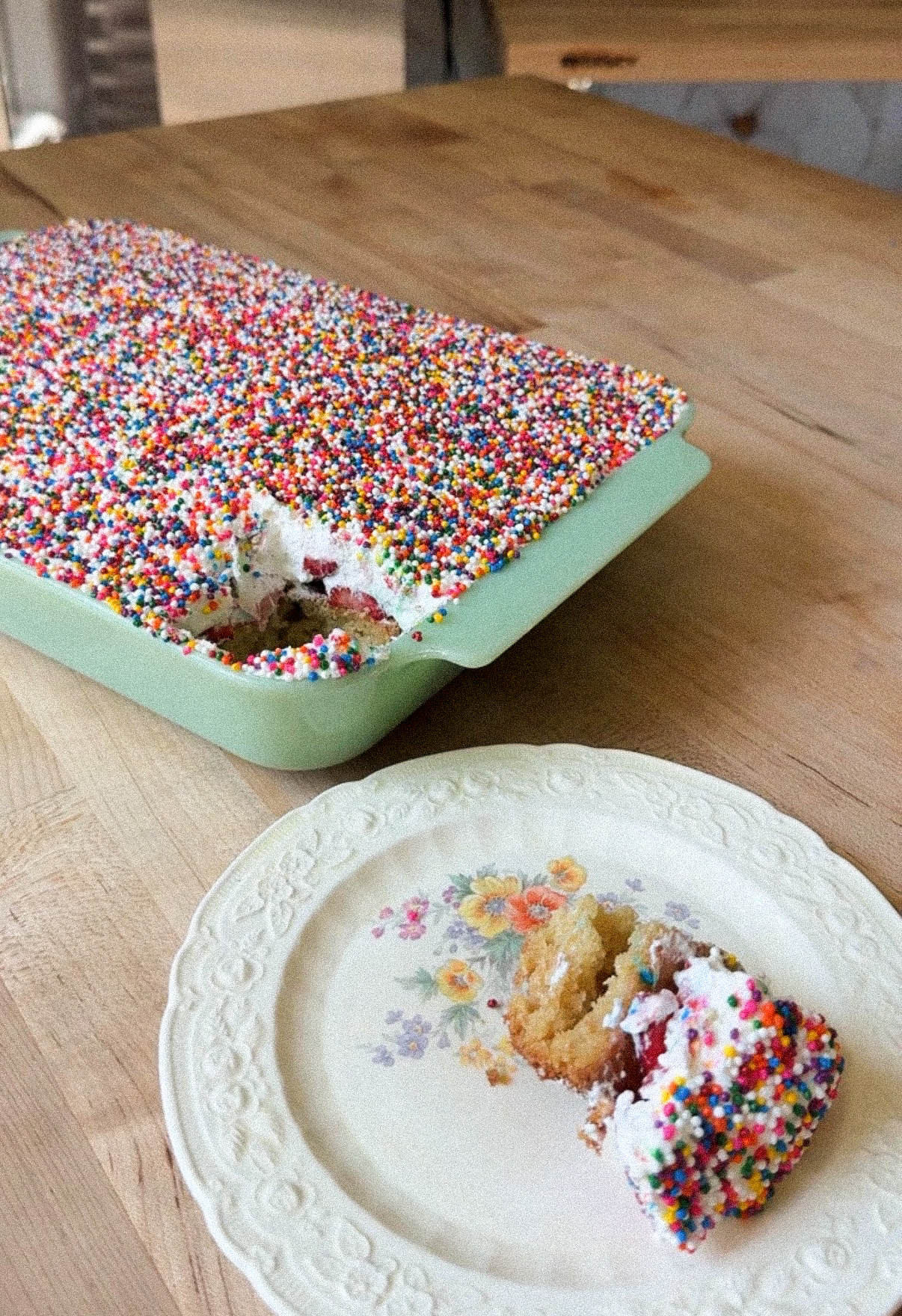
Long Fermented Vanilla Bean Cake
Ingredients
FOR THE CAKE
- 320 g All Purpose Flour
- 120 g Olive Oil
- 100 g Active Starter
- 125 g Warm Water
- 3 Eggs (yolks and whites separated)
- 300 g Granulated Sugar
- 200 g Buttermilk
- 50 g Greek Yogurt
- 2 tsp Baking Soda
- 15 g Vanilla Bean Paste
FOR THE WHIPPED CREAM
- 480 g Heavy Cream
- 170 g Maple Syrup
- 10 g Vanilla Bean Paste
Instructions
DAY ONE
- Mix your flour, olive oil, active starter, and warm water thoroughly. Leave at room temperature for 12-24 hours to fully ferment.
DAY TWO
- Preheat your oven to 350°F. Then, add the egg yolks and sugar to the bowl of a stand mixer. Using the whisk attachment, beat the mixture until light and fluffy. In a separate bowl, whip the egg whites until you form stiff peaks.
- Add the buttermilk, greek yogurt, vanilla bean paste, and baking soda to the egg and sugar mixture. Whisk until combined.
- Add your fermented flour mixture to the batter. Whisk until smooth, starting at a low speed to avoid splashing. The batter should be smooth! Remove the bowl from the stand mixer and gently fold the whipped egg whites into the batter, careful not to remove the airiness.
- Divide the batter to your greased cake pans (Recommended: (1) 9”x13” pan OR (2) 8” round pans). For a 9”x13” pan, bake for 35-40 minutes. For 8” round pans, bake for 25-30 minutes. The cakes should be golden brown and full set in the center. If using the 9”x13” pan, you may need to cover the top with foil halfway through to prevent the top from burning.
- While your cakes cool, prepare the whipped cream by whisking together the cream, maple syrup, and vanilla bean paste until stiff peaks form.
- Allow the cake to fully cool before frosting!