Sourdough Pizza Dough
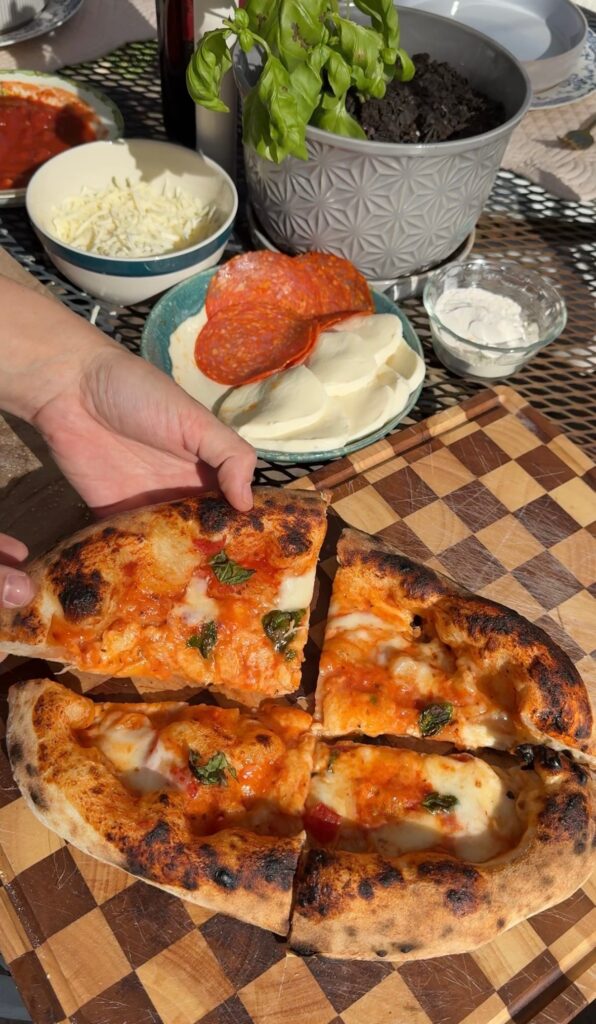
The Pizza That Made Delivery Feel Unnecessary
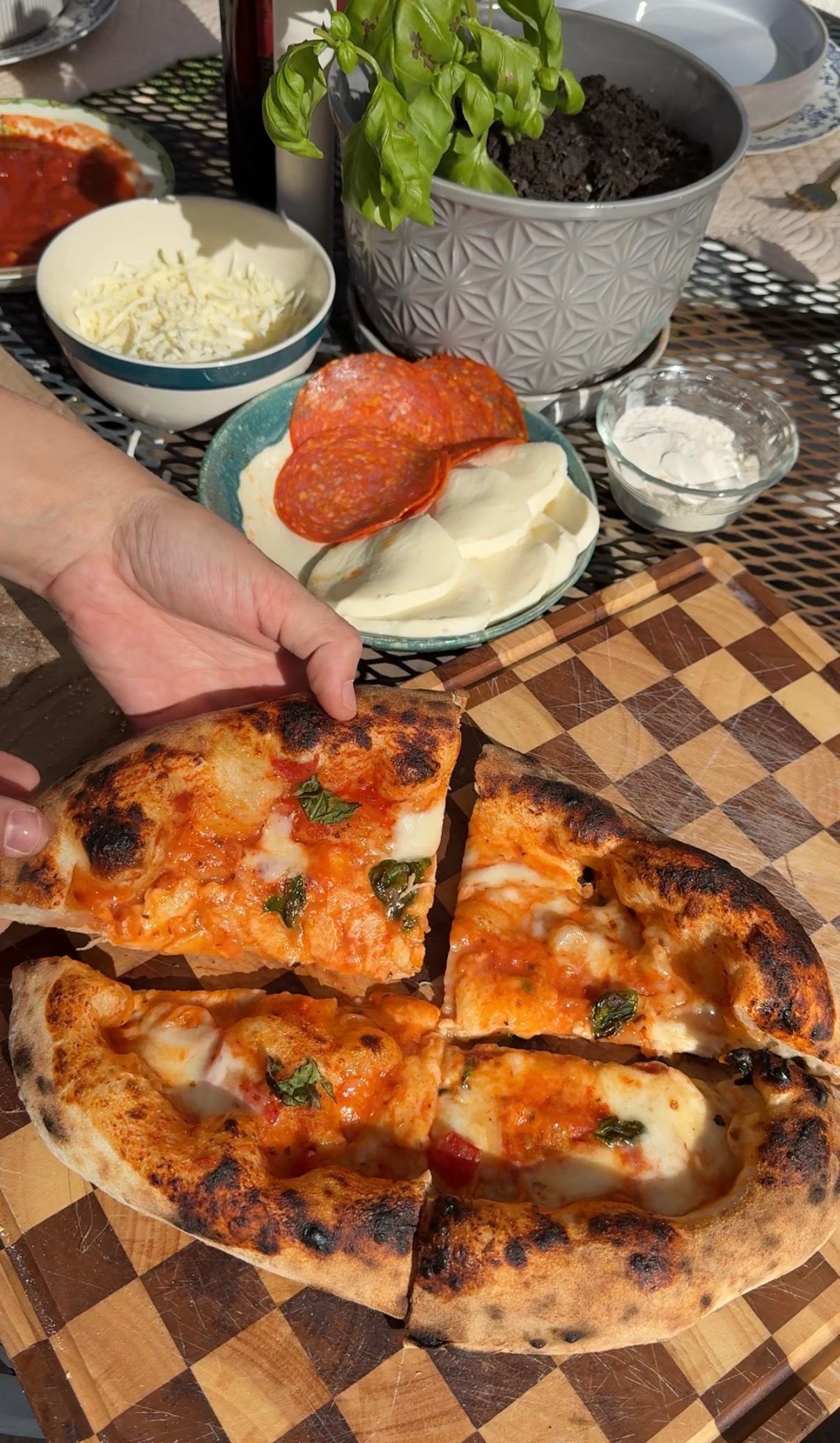
There is a moment that happens the first time you pull a sourdough pizza out of a screaming hot oven on a baking steel. The crust has blistered and charred in spots around the edges. The bottom is crisp in a way that holds up under the weight of the toppings without going soft. The interior has a chew that store-bought dough and most restaurant pizza cannot replicate. It is the moment delivery pizza stops being the default and homemade becomes the thing you actually look forward to.
This dough is the reason that moment happens. Ten hours of fermentation, four sets of stretch-and-folds, and a baking steel preheated until it means business. The technique is approachable and the results are the kind that make people ask where you ordered from.
Bread Flour Over All Purpose
The choice of bread flour rather than all-purpose is the first decision this recipe makes on your behalf, and it is the right one. Bread flour has a higher protein content, typically around 12 to 13 percent compared to all-purpose at 10 to 11, which means more gluten development and a dough that stretches further without tearing. For a pizza that needs to be pulled thin enough to blister quickly in a hot oven, that extensibility is everything.
The higher protein also gives the finished crust more chew, the kind of chew that registers as satisfying rather than tough, with a slight resistance that gives way cleanly when you bite through it. It is what separates a pizza crust that tastes like bread from one that tastes like pizza.

Stretch and Fold Instead of Kneading
Traditional pizza dough gets kneaded. This dough gets stretched and folded, four sets over two hours, and then left alone to ferment. The stretch-and-fold method builds gluten strength gradually without the sustained mechanical work of kneading, which means the dough stays extensible and relaxed rather than tight and resistant. A tight dough springs back when you try to shape it. A well-developed sourdough pizza dough with proper fermentation behind it stretches willingly and holds its shape once it gets there.
Each set of stretch-and-folds takes about a minute. Wet your hand, grab one side of the dough, stretch it up and fold it over the center, then rotate the bowl and repeat on all four sides. Cover and wait thirty minutes. Four sets, two hours of total elapsed time, and then the dough goes into bulk fermentation and does the rest of the work on its own.
The Fermentation Is the Flavor
Eight hours of bulk fermentation at room temperature is where this dough becomes itself. The wild yeast in the starter works through the flour slowly, producing carbon dioxide that builds the dough’s structure and organic acids that develop the flavor. The result is a crust with a depth that instant yeast dough simply cannot produce, mildly tangy, complex, and interesting enough to taste good even before the toppings go on.
Temperature drives the timeline. A warmer kitchen, above 75°F, speeds fermentation and the dough may be ready in six or seven hours. A cooler kitchen slows it and might need the full ten. Look for a dough that has grown noticeably, feels airy when pressed, and has small bubbles visible on the surface. Those bubbles are the sign that fermentation has done its job.
The optional overnight cold proof after bulk fermentation extends the flavor development further and adds flexibility to the timeline. A cold-proofed dough can sit in the refrigerator for up to 24 additional hours, which means the pizza can happen whenever you’re ready for it rather than on the dough’s schedule.
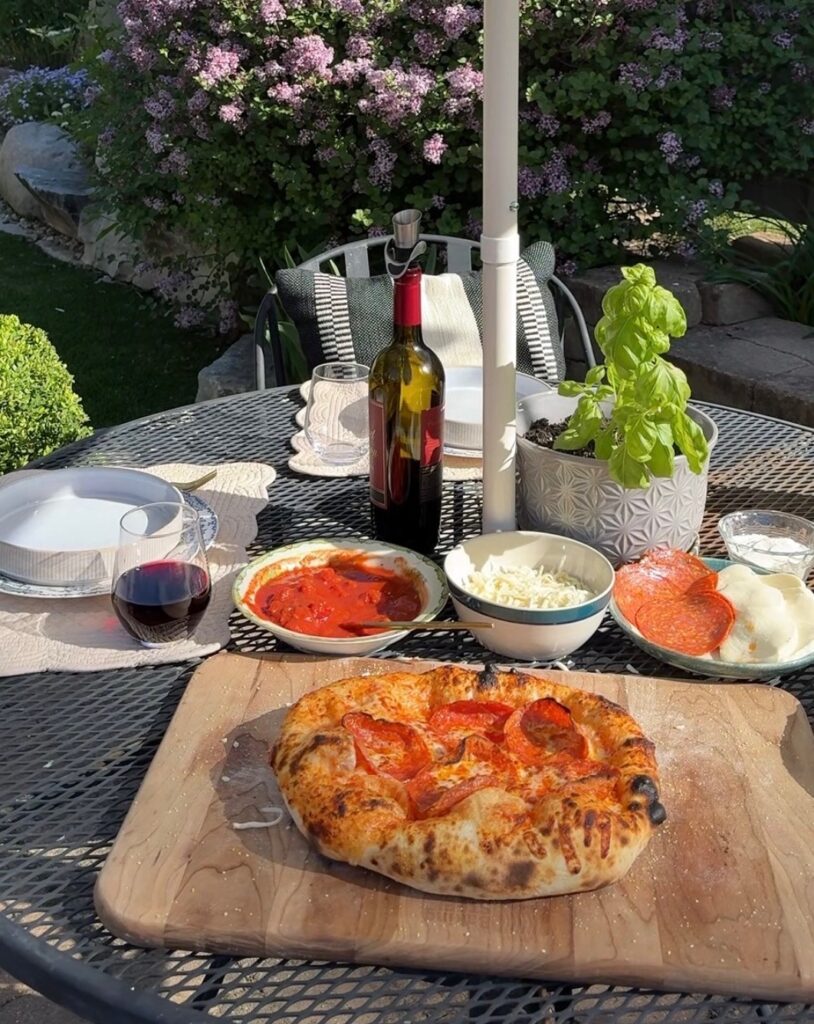
The Baking Steel Is Not Optional
A baking steel preheated at 475°F for at least 45 minutes to an hour stores and conducts heat at a level that a baking sheet or even a pizza stone cannot match. When the pizza hits the steel, the bottom crust receives an immediate, intense burst of heat that sets it within the first few minutes of baking, producing the crisp, slightly charred undercarriage that makes a great pizza great. The toppings cook from the oven’s ambient heat above while the steel handles the crust below.
A pizza stone works as a substitute and produces good results. A baking sheet works in a genuine pinch. But the steel is the piece of equipment that closes the gap between homemade and the kind of pizza you would drive across town for, and it earns its place in the kitchen quickly.
Semolina on the Peel Is the Move That Saves the Pizza
Transferring a topped pizza from a peel to a screaming hot steel is the moment that intimidates people the most, and semolina is what makes it go smoothly. Unlike flour, which can burn at high temperatures and create an acrid smell, semolina acts like tiny ball bearings under the dough, allowing the pizza to slide freely off the peel with a short, confident forward motion. Cornmeal works the same way and is often easier to find.
The key is building and topping the pizza quickly once it is on the semolina-dusted peel, so the dough does not have time to absorb the moisture of the sauce and stick before the transfer happens. Top it, check that it slides freely by giving the peel a gentle shake, and get it into the oven.
Shape With Confidence and Gravity
The shaping step is where first-timers often add too much flour and rush the stretching, ending up with a thick, uneven round that bakes like flatbread rather than pizza. The dough needs to be handled with patience and allowed to do most of the stretching on its own weight.
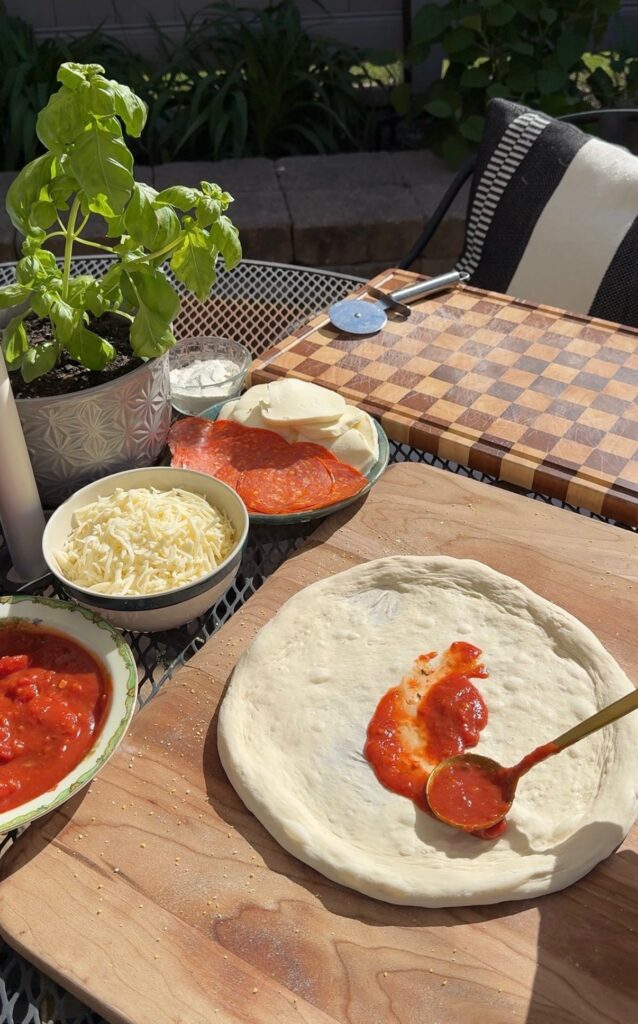
Start by pressing the dough into a rough circle with your fingertips, leaving a slightly thicker rim around the edge. Then lift it onto your fists and let gravity pull it downward as you rotate it slowly around the circumference. The dough will stretch more than you expect once it gets moving. Alternate between the fist stretch and laying it back on the surface to pull it wider until it reaches the thinness you’re after. Thin enough to blister, thick enough to hold the toppings without tearing.
Sourdough Pizza Dough
Equipment
- Baking Steel/Pizza Stone
- Pizza Peel (or large wooden cutting board)
Ingredients
- 300 g Bread Flour
- 200 g Water (room temperature)
- 60 g Active Sourdough Starter
- 10 g Olive Oil
- 6 g Salt
- Semolina or Cornmeal (to sprinkle on the pizza peel)
Instructions
- Add the flour, water, sourdough starter, olive oil, and salt to a medium-sized bowl. Mix for roughly 5 minutes to build strength in the dough until everything is well combined.
- Cover and allow the dough to rest for 30 minutes, then perform 4 sets of stretch-and-folds, each 30 minutes apart. Allow it to bulk ferment for +/- 8 hours (based on an average room temperature of 72°F).
- Optionally, you can place the dough into the refrigerator after bulk fermentation for an overnight cold proof in an airtight container.
- Remove the dough from the bowl onto a shaping surface. Pre-shape it with a bench scraper into a smooth round ball. Sprinkle the dough with flour, cover with a tea towel, and allow it to rest for 1 hour (if you chose to cold ferment, let the dough rest for 2 hours).
- Preheat the oven to 475°F with a baking steel inside. You want the baking steel to be very hot.
- Shape the pizza. To do this, start by dimpling/pressing the dough into a round shape. Then, begin gently stretching the dough to pull it as thin as possible. Once it begins to stretch, hold the dough with two balled fists, allowing it to stretch evenly around the circumference to stretch it as thin as possible. Alternate between pulling the dough on the shaping surface and stretching it around your fists until you achieve your desired thinness.
- Sprinkle a layer of semolina on your pizza peel and place the pizza on top. Cornmeal will make the oven transfer so easy!
- Top the pizza as desired, then bake for 10-18 minutes, depending on the pizza's thickness.