Quick Homemade Baguettes
The Bread That Doesn’t Ask You to Wait Until Tomorrow
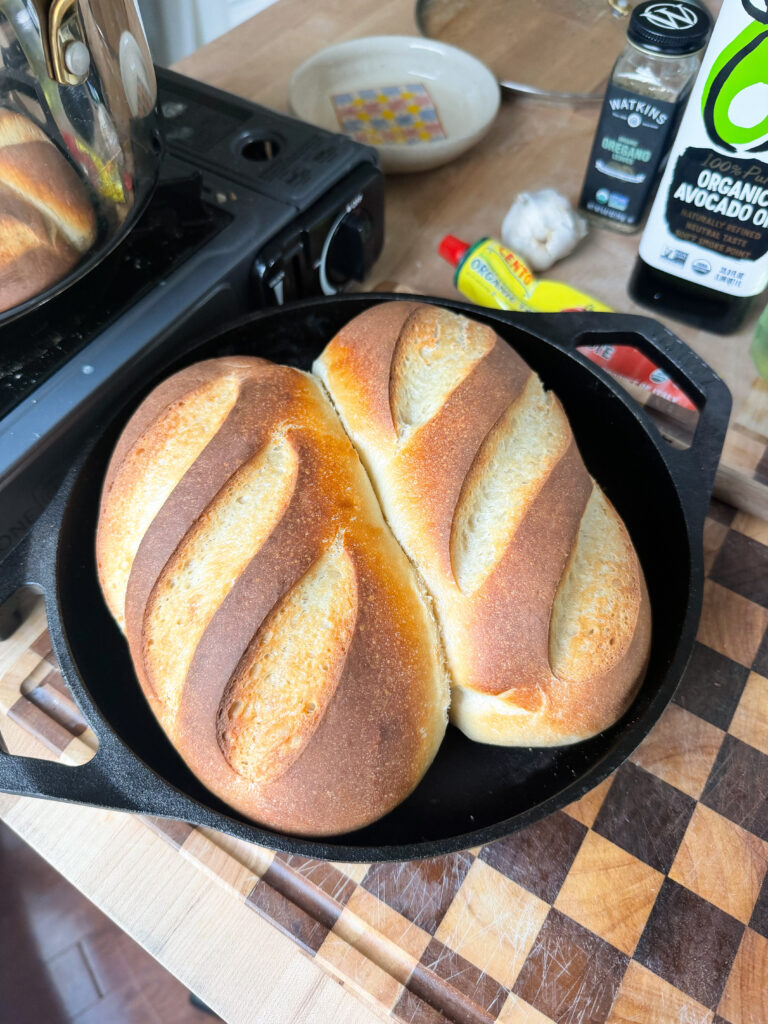
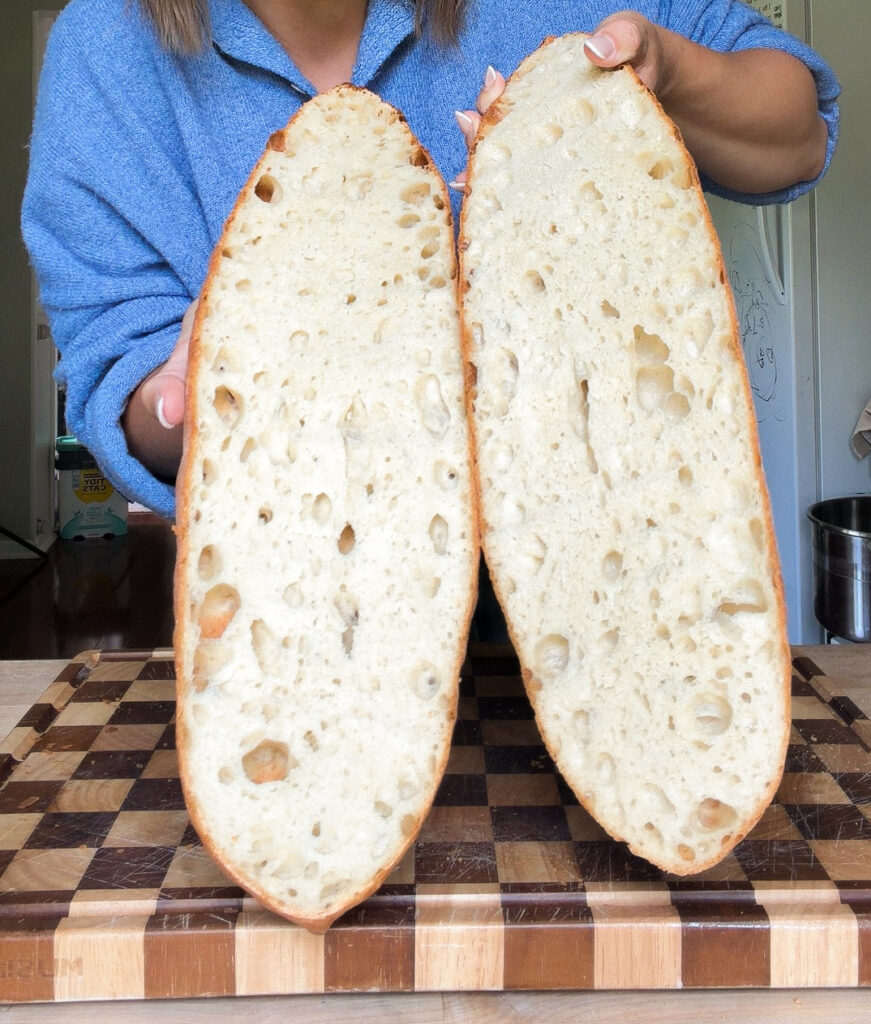
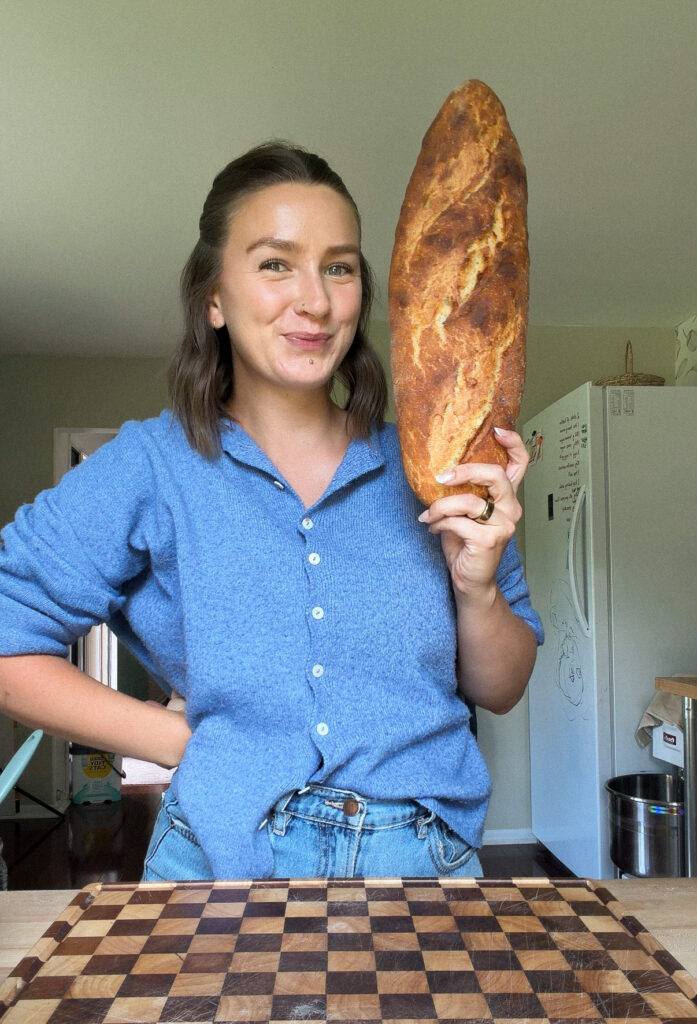
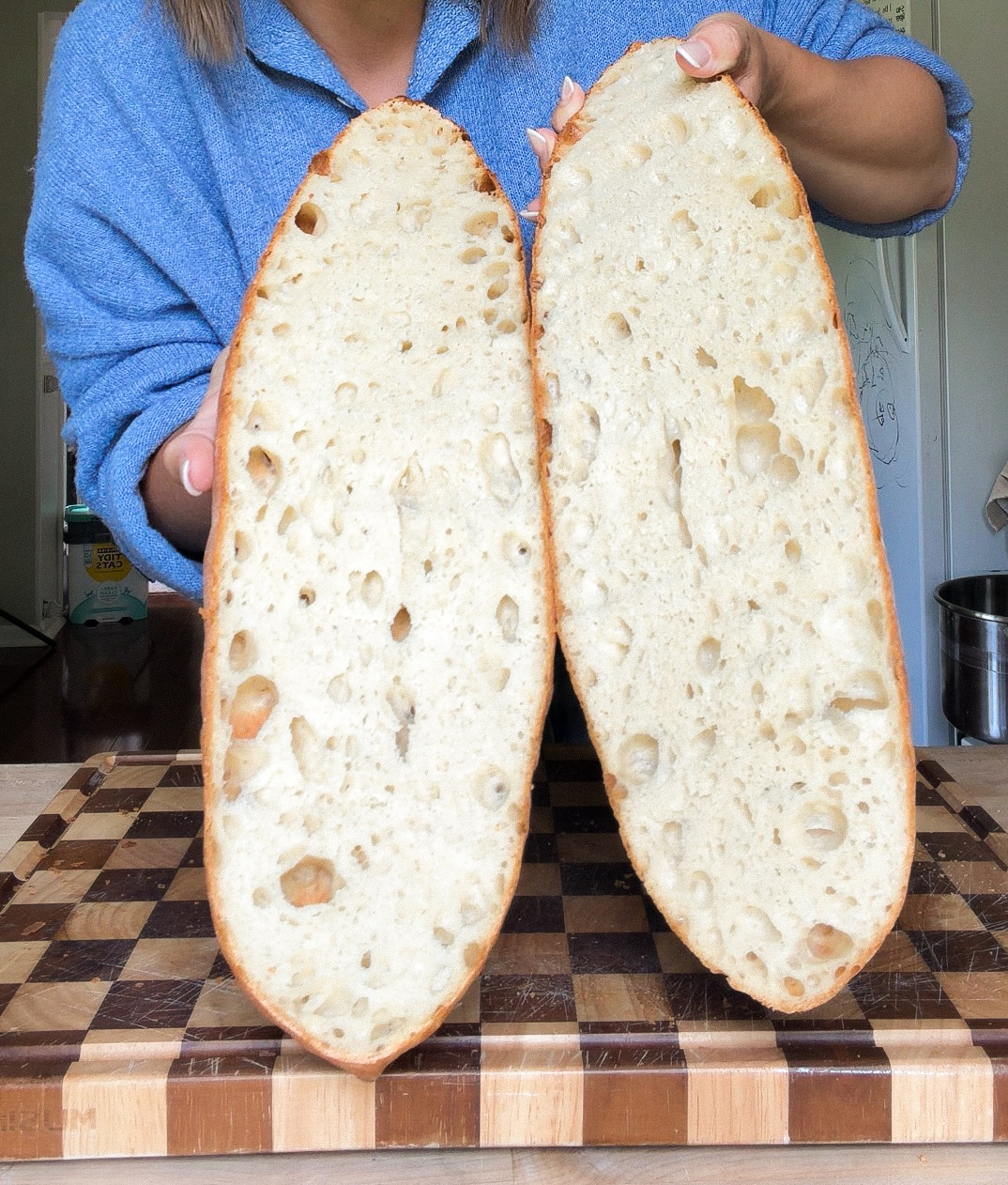
A real baguette has a reputation for requiring either a trip to a bakery or a multi-day commitment most people aren’t prepared to make on a random Tuesday. This recipe sits in the middle, and it sits there comfortably. Active dry yeast instead of a sourdough starter means the timeline collapses from days to a few hours. The crust still shatters. The crumb is still open and airy with those big, irregular holes that make a good baguette worth tearing into rather than slicing.
What it asks for in return is some attention during the stretch-and-folds, a little patience during the shaping, and a kitchen willing to fill briefly with steam. None of it is difficult. All of it matters.
Two Flours, One Better Dough
Combining all-purpose flour with bread flour rather than using one or the other is a small decision with a real effect on the finished texture. Bread flour’s higher protein content builds a stronger gluten network, which gives the dough the strength it needs to hold its shape during the long stretch into a baguette form and to trap the gas that creates those characteristic large, irregular air pockets. All-purpose flour on its own would produce a softer, less structured dough.
But all bread flour can make a dough that’s almost too elastic, fighting back during shaping in a way that makes the long, even stretch into a baguette form more difficult. The fifty-fifty split here balances strength with extensibility, giving you a dough that holds its structure without resisting every attempt to shape it.

Stretch and Fold Instead of a Long Knead
Two rounds of stretch-and-folds, spaced fifteen minutes apart, do the work that a much longer hand-knead would otherwise require. Each fold develops the gluten incrementally, building strength into the dough gradually rather than all at once, and the rest periods in between allow the gluten that has already developed to relax slightly before the next round of folding.
This method is gentler on the dough than aggressive kneading and produces a more open, irregular crumb structure as a result. Aggressive kneading tends to create a tighter, more uniform gluten network, which bakes into a tighter, more uniform crumb. The stretch-and-fold method leaves things slightly less even, and in a baguette, that unevenness is exactly what you want.
Pre-Shaping Into an Oval Sets Up Everything After
Shaping a baguette starts well before the dough becomes a long log. The pre-shape, formed by scraping the dough into an oval rather than the round ball used for most other bread shapes, orients the gluten structure in the direction the dough will eventually be stretched. Skipping this step or pre-shaping into a circle the way a boule would be shaped makes the actual baguette shaping considerably harder, since the dough has to fight against a structure that was built for a different shape entirely.
The five-minute rest after pre-shaping lets the gluten relax just enough that the dough won’t spring back and resist during the final shape, while still holding enough structure to stretch evenly rather than tearing.
The Folding Sequence Builds the Internal Structure
The layered folding process, bringing the top edge to the center, then three-quarters of the way down, then rolling the whole thing into a log, is doing more than just creating the baguette’s shape. Each fold creates a seam, and those seams become layers within the dough that contribute to the open, irregular crumb structure once the bread bakes. Pressing each fold to seal it thoroughly is important for a different reason: a poorly sealed seam can open up during baking, creating a blowout that disrupts the shape and lets steam escape from the wrong place.
Rolling outward from the center to the edges with the palms, rather than rolling the whole length at once, helps create the tapered ends that give a baguette its classic silhouette while keeping the center thicker and more substantial.
Steam Is the Difference Between Good and Great
The lava rocks and boiling water are not a gimmick. Steam in the first several minutes of baking keeps the surface of the dough soft and pliable while the interior begins to rise rapidly in the oven’s heat, which allows the bread to expand fully before the crust sets. Without that steam, the crust forms too early and constrains the dough’s rise, producing a denser loaf with less of that dramatic, airy crumb.
Pouring the boiling water over the lava rocks the instant the baguettes go into the oven creates an immediate burst of steam, and closing the door quickly afterward traps it where it can do its job. Fifteen minutes with the steam, then opening the door to release it and finish the bake dry, gives the crust the chance to set and crisp once the dough’s expansion is mostly complete. That sequence, steam then dry heat, is the entire secret behind a baguette’s signature crust.
Listen for the Hollow Sound
A baguette that looks golden brown can still be underbaked in the center, which is why the instruction to listen for a hollow sound when tapped matters more than visual color alone. A fully baked loaf has dried out internally enough that tapping the bottom produces a distinct, resonant hollow sound, the auditory confirmation that the crumb structure has fully set and the loaf won’t collapse or turn gummy once it’s sliced.
Letting the baguettes cool completely on a wire rack before cutting into them is the final piece of patience this recipe asks for. The crumb is still finishing its structural set in those final minutes, and a baguette sliced too early loses moisture in a rush and can turn slightly gummy near the center. Wait for it. The crust will still be loud when you finally do cut in.
Quick Homemade Baguettes
Ingredients
- 250 g All Purpose Flour
- 250 g Bread Flour
- 375 g Warm Water
- 14 g Active Dry Yeast
- 20 g Olive Oil
- 10 g Salt
Instructions
- Add the warm water, oil, and yeast to a large bowl. Allow it to bloom for 5 minutes.
- Next, add your flour and salt. Mix with your hands until evenly combined, roughly 5 minutes.
- Cover the dough and allow it to rest for 15 minutes. Then, perform a set of stretch-and-folds. Repeat this rest and stretch-and-fold sequence one more time.
- Cover the dough and allow it to rise for 1.5-2 hours, until it has nearly doubled in size.
- Remove the dough onto a clean shaping surface and divide it into two even pieces.
- Pre-shape the dough. With circular motions, scrape the dough under itself and toward you to create an oval shape. Unlike a traditional sourdough loaf, pre-shaping into an oval, rather than a circle, will help the shaping process. Lightly flour and let the dough rest for 5 minutes.
- To shape your baguette, flip the pre-shaped ball of dough upside down onto a lightly floured surface so that the smooth side is touching the counter. Stretch the dough into a rectangle with the long side closest to you.
- Starting at the top of the rectangle (the top long side), bring the edge to the center of the rectangle. Press down to seal. Then, fold it again until it is ¾ of the way down the rectangle. Press to seal. Lastly, fold the dough over itself one more time until you’ve rolled the entire rectangle into a long log. Press to seal this edge very thoroughly.
- With the palms of your hands, begin rolling the baguette outward, starting in the middle and progressively moving to the edges.
- Place your shaped baguettes onto a parchment lined baking sheet and preheat your oven to 450°F.
- Place a metal roasting pan filled with lava rocks into the oven while it preheats. Boil the water and have it ready as soon as you load the baguettes into the oven.
- Score the baguettes. For standard baguettes, I recommend (3) diagonal slashes down the length of the baguette.
- Put the baguettes into the oven and immediately pour the boiling water over the lava rocks. Quickly close the oven door.
- Bake with the steam for 15 minutes. Then, release the steam by opening the oven door. Bake for an additional 115-20 minutes, until the baguettes are deeply golden, light, and sound hollow when tapped.
- Allow the baguettes to cool completely on a wire rack before enjoying.