Sourdough Gnocchi (made with discard)
Dinner That Looks Impressive and Isn’t Actually Hard
Homemade gnocchi has an unfair reputation for being fussy. The image most people have involves a lot of flour, a lot of failed batches, and a kitchen that looks like it lost a fight with a potato. This recipe would like to offer a different experience.
Four ingredients go into the dough beyond the potatoes themselves. Sourdough discard, parmesan, an egg, and a little flour. That’s the whole list. What comes out the other side is a gnocchi that is tender without being gummy, with a faint tang from the starter and a salty, nutty backbone from the parmesan that makes the whole thing taste far more considered than the effort level suggests.
Why Baked Potatoes and Not Boiled
The potato preparation is where this recipe diverges from most and is better for it. Baking the russet potatoes at a high heat rather than boiling them drives off moisture from the inside out. Less water in the potato means less flour is needed to bring the dough together, and less flour is the single most important factor in a light, pillowy gnocchi.
Boiled potatoes absorb water. Baked potatoes lose it. That distinction plays out in the finished texture in a way that is immediately obvious the first time you try both side by side.
Once the skins come off and the potato is mashed, it needs ten minutes to cool before anything else joins it. This is not optional patience. Adding the egg to a piping hot potato scrambles it slightly and throws off the dough’s cohesion. Ten minutes is a small wait for a dough that comes together cleanly.
What the Sourdough Discard Is Actually Doing
In a sweet recipe, sourdough discard contributes tang, chew, and a layer of complexity that plays against sugar. In a savory dough like this one, it does something slightly different. The acidity tenderizes the dough from within, helping it stay soft even after boiling. It also introduces a very subtle fermented flavor that sits underneath the parmesan and potato without identifying itself as sourdough to anyone who isn’t looking for it.
People will taste this gnocchi and know it’s better than what they’ve had before without necessarily knowing why. That’s the discard doing quiet work.
Parmesan Is Not Negotiable, and Freshly Grated Is Not Optional
Pre-grated parmesan has anti-caking agents in it that affect how it melts and how it incorporates into a dough. In a sauce, the difference is noticeable. In a dough, it matters even more. Freshly grated parmesan melts directly into the potato mixture, becoming part of the dough’s structure rather than sitting in it as separate flecks. The flavor is sharper, saltier, and more present in every single piece of gnocchi.
A microplane or the fine side of a box grater does the job in about two minutes. It is worth those two minutes.
On Kneading and Knowing When to Stop
Two minutes of kneading on a floured surface is the directive, and it means two minutes. Overworked gnocchi dough develops too much gluten and turns tough after boiling. The goal is a dough that just comes together, smooth enough to roll without cracking, soft enough that it gives slightly under your fingers. If it’s sticking to the surface, a small amount of extra flour brings it back. Add it gradually.
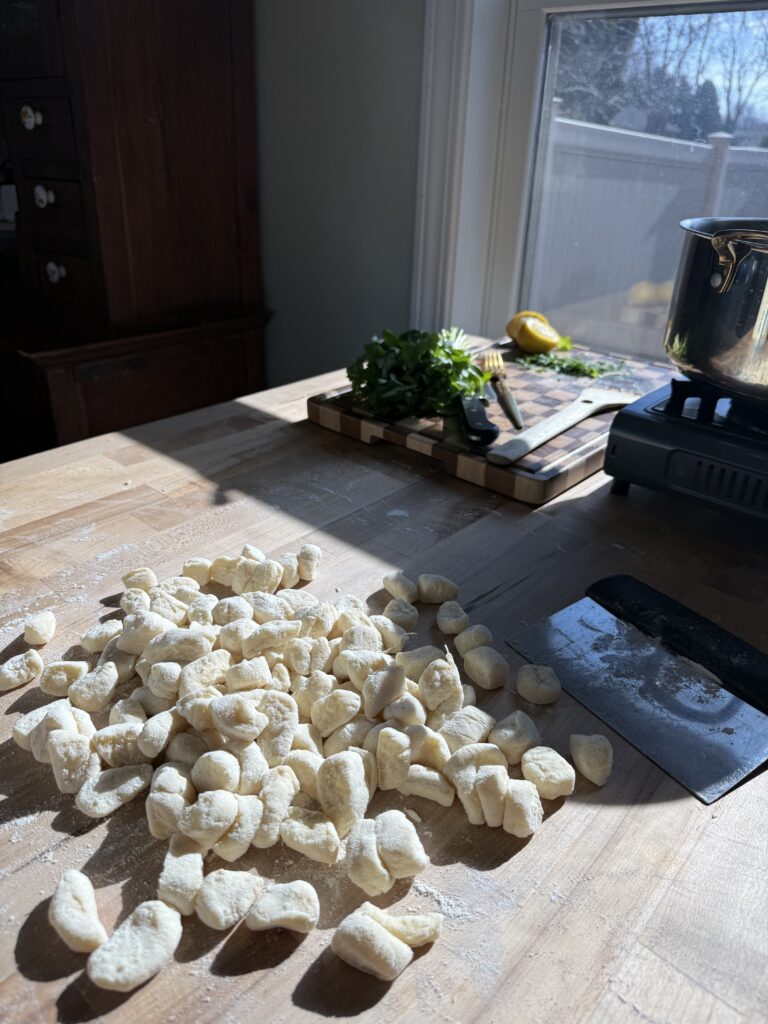
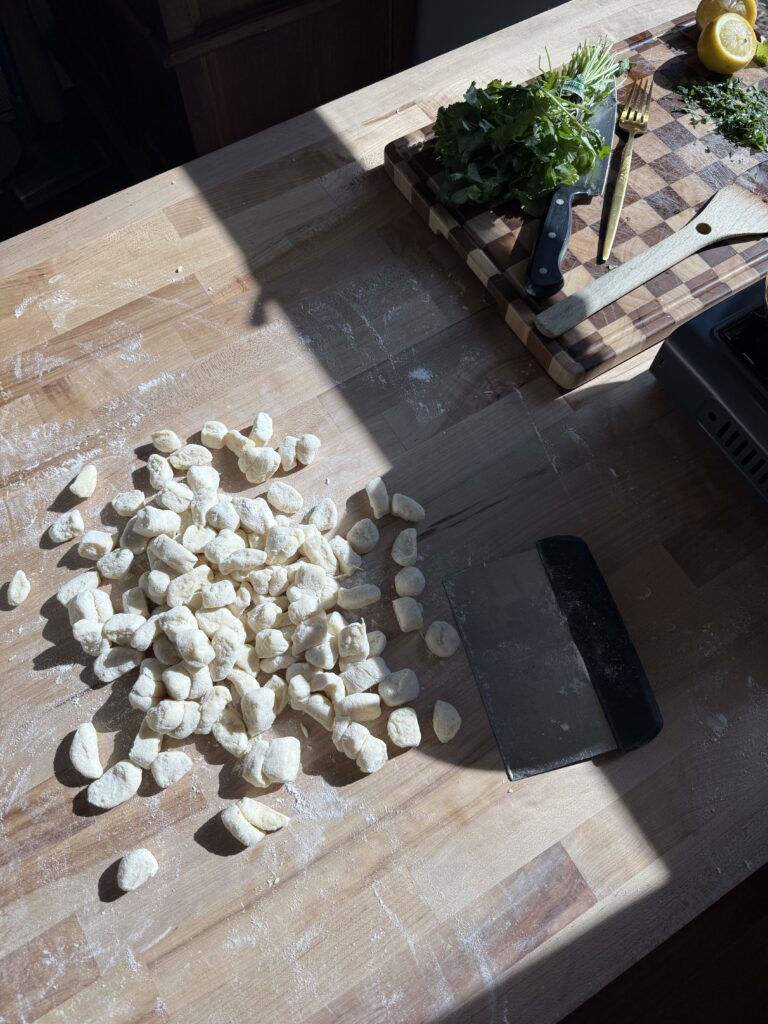
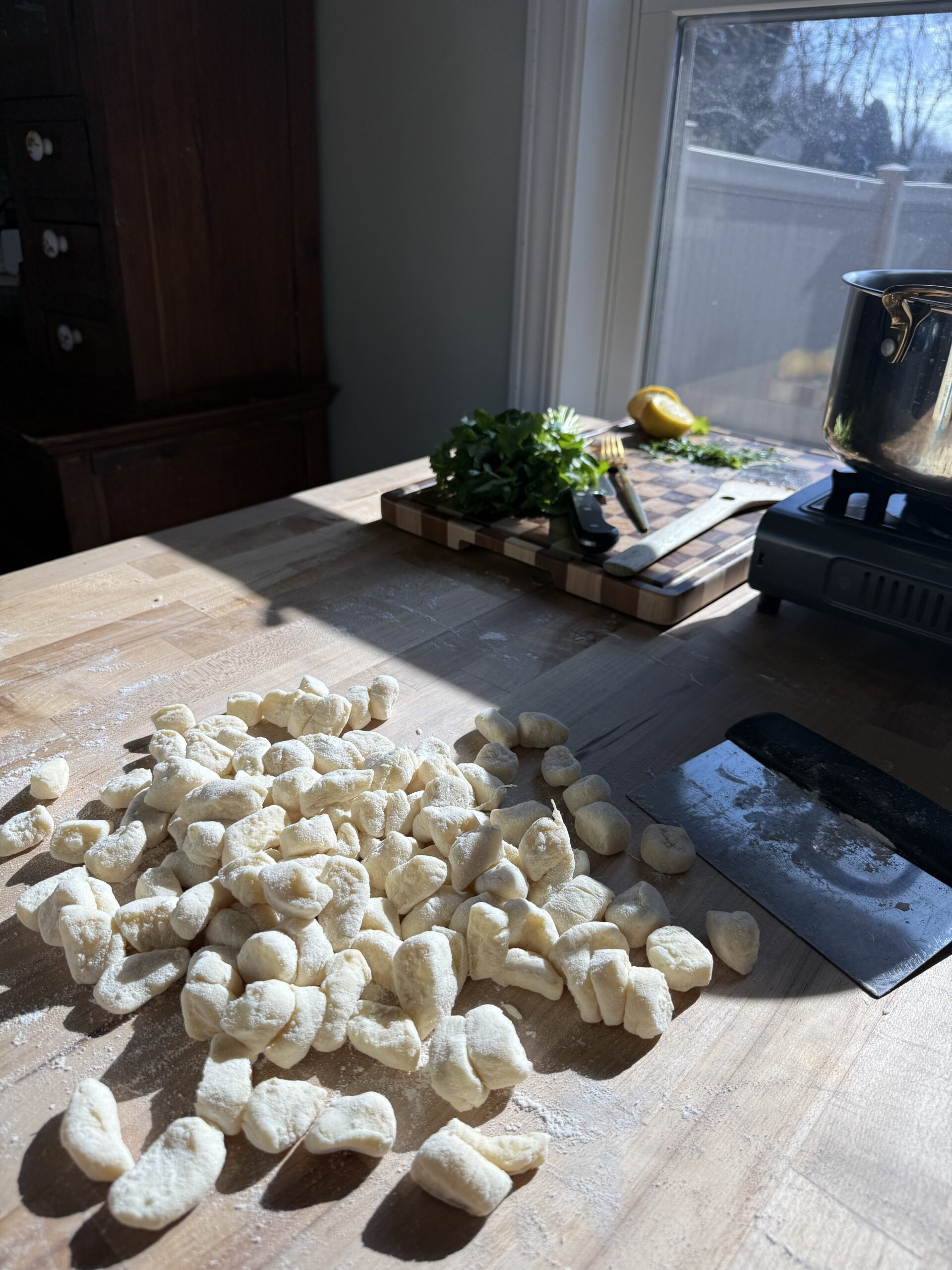
Rolling each portion into a log and cutting it into half-inch pieces is the most repetitive part of the process and also the most satisfying. There is something very good about a lined-up tray of gnocchi that you made yourself, waiting to hit the water.
The Boil and What Comes After
Salted water, a rolling boil, and five to seven minutes is all the cooking the gnocchi needs. They will tell you when they’re ready by floating to the surface. Once they’re up, give them another minute and pull them out.
From there, the gnocchi goes wherever you want to take it. Brown butter and sage is the classic move for a reason, the nuttiness echoing the parmesan already in the dough. A simple tomato sauce works. A heavy cream sauce with garlic and more parmesan works even better. Or, for something that will make people stop talking mid-conversation, sear the boiled gnocchi in a hot pan with butter until the outside is golden and crisp while the inside stays pillowy. That version does not need much else.
Sourdough Gnocchi (made with discard)
Ingredients
- 2 Russet Potatoes
- 60 g Sourdough Starter (active or discard)
- 100 g Flour
- 100 g Parmesan Cheese (freshly grated)
- 1 Egg
- 1 tsp Salt
Instructions
- Preheat the oven to 425°F. Poke holes around both russet potatoes and bake them on a baking sheet for 35 minutes until tender.
- Once the potatoes are baked, gently remove the skins and mash them in a mixing bowl. Allow the mashed potatoes to cool for 10 minutes. Then, add the sourdough starter, flour, parmesan cheese, egg, and salt. Mix to combined, then remove the dough from the bowl and knead on a floured surface for 2 minutes. Add small amounts of extra flour as needed until the dough comes together.
- Begin boiling a large pot of salted water. Separate the gnocchi dough into 4 large chunks. Roll each ball of dough into a log, roughly 1” in diameter. Using a knife or bench scraper, cut the logs into ½” pieces.
- Boil the gnocchi for 5-7 minutes.