
Sourdough Ciabatta
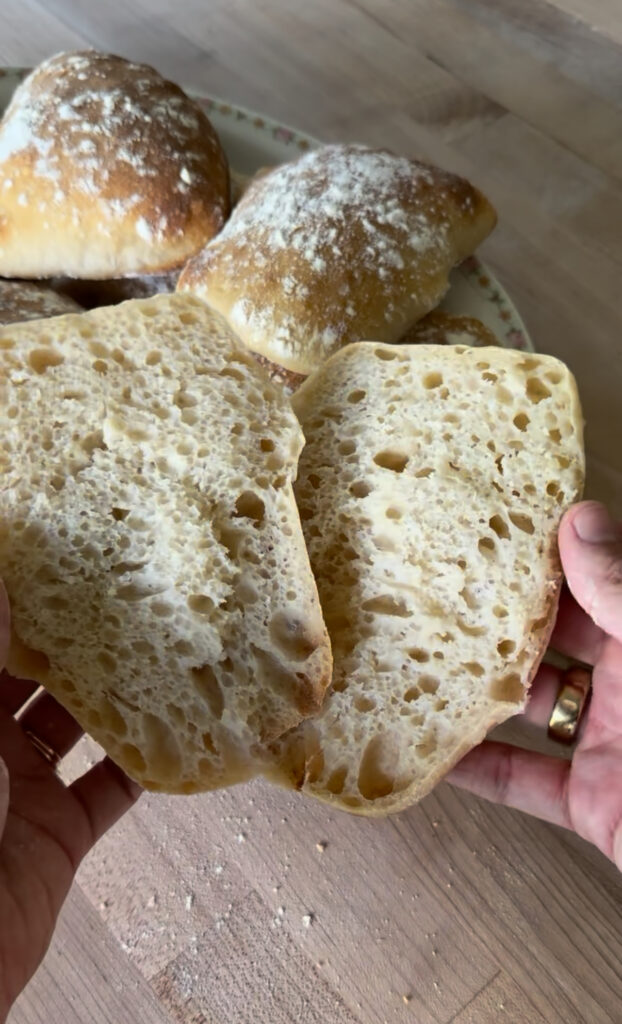
If you love the flavor of sourdough but want something lighter, airier, and incredibly versatile, sourdough ciabatta is a recipe worth mastering.
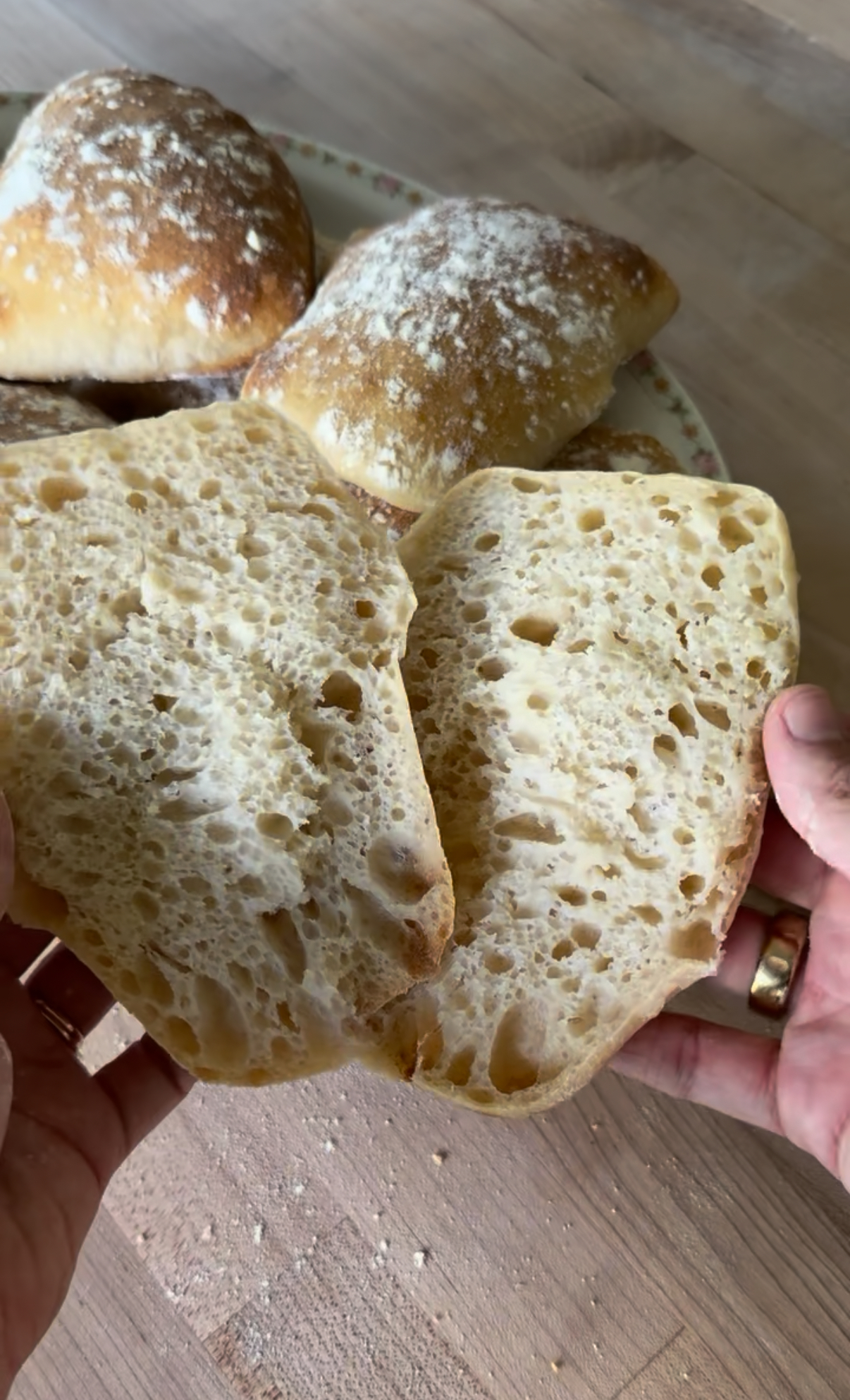
Known for its open crumb, crisp exterior, and soft interior, ciabatta may sound intimidating — but this naturally leavened version is surprisingly approachable. With just a handful of ingredients and a high-hydration dough, you can create bakery-style ciabatta at home without special equipment or complicated techniques.
High Hydration = That Classic Open Crumb
This dough sits around 78% hydration, which is key to achieving ciabatta’s signature interior.
High hydration allows:
- Larger air pockets
- Better oven spring
- A soft, flexible crumb
The dough will feel loose and sticky — that’s expected. Gentle handling and proper fermentation do the heavy lifting.

What Makes Ciabatta Different from Other Sourdough Breads?
Ciabatta is defined by its high hydration and minimal shaping, which allow the dough to trap large air pockets during fermentation and baking.
Compared to a traditional sourdough boule, ciabatta:
- Has a more open crumb
- Feels lighter and airier
- Uses less shaping tension
- Bakes into flatter, rustic loaves or rolls
This makes it ideal for sandwiches, panini, and dipping.
Beginner-Friendly (Even If It Looks Advanced)
Despite its bakery reputation, sourdough ciabatta is surprisingly forgiving.
This recipe:
- Requires no mixer
- Uses simple stretch-and-folds or coil folds
- Involves minimal shaping
- Relies more on fermentation than technique
If you’ve baked sourdough before, this is a great next recipe.
A Rustic Bread Worth Learning
This sourdough ciabatta is the kind of recipe that looks impressive but fits seamlessly into everyday baking. It’s rustic, practical, and deeply satisfying — proof that high-hydration sourdough doesn’t have to be complicated to be beautiful.
Once you’ve made it once, it’s hard not to return to it again and again.
Sourdough Ciabatta
Equipment
- Kitchen Scale
Ingredients
- 500 g Bread Flour 4 cups
- 390 g Water 78% hydration – 1.5 cups
- 100 g Active Sourdough Starter ⅓ cup
- 10 g Olive Oil 2 tsp
- 10 g Salt 1.5 tsp
Instructions
MIX
- Measure your water, oil, and active starter into a bowl. Gently stir to dissolve the starter. Then, add your flour and salt. Mix with your hands until thoroughly combined.
- Cover your bowl, and let the dough rest for 30 minutes. After the initial rest, perform 4-5 sets of stretch-and-folds or coil folds, each 30 minutes apart.
BULK FERMENT
- Allow the dough to bulk ferment for 7-8 hours (my dough was around 75°F). This time frame starts at the initial mix, not after the stretch-and-folds are done. If your dough is warmer, proof for LESS time. If your dough is colder, proof for MORE time. The dough should be risen, bubbly, airy, and not sticky.
- OPTIONAL: After the dough is perfectly proofed, place the entire bowl in the refrigerator to cold proof (make sure it is well covered).
SHAPE
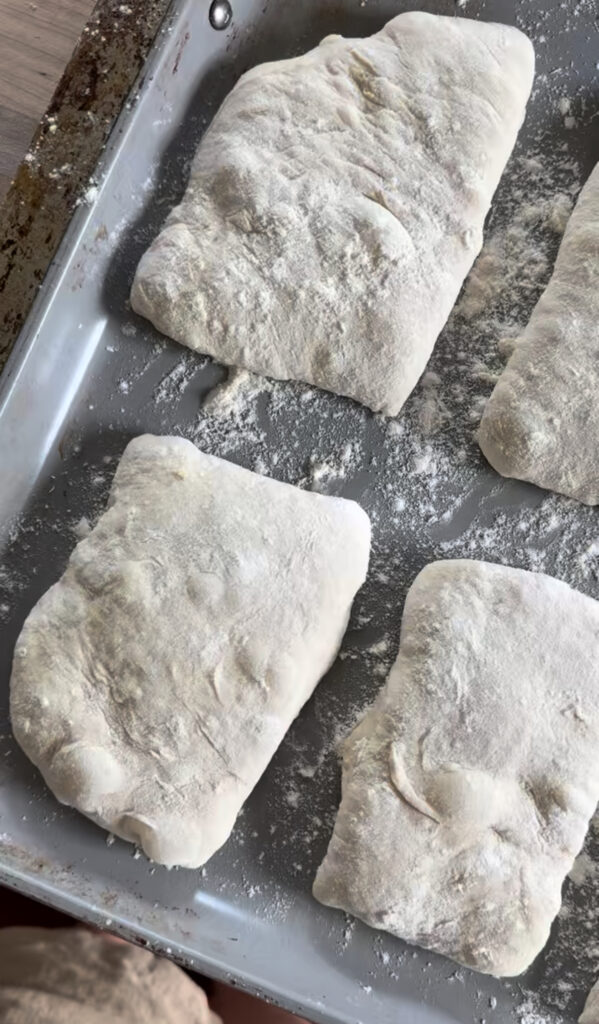
- Dump the dough onto a well-floured, clean work surface. Stretch the dough into a 9”x12” rectangle. Sprinkle flour over the dough. Cut your dough into 8 equal rectangles.
- Transfer your buns to a baking sheet (line with parchment paper if needed). Allow the dough to proof for another 2 hours. If you cold-proofed your dough, you will
- need to let it sit for 5 hours. The dough should be airy and puffy before baking.
BAKE
- Pre-heat your oven to 475°F.
- Bake at 475°F for 10 minutes, then lower the temperature to 425°F. Bake for another 20 minutes, until golden brown.
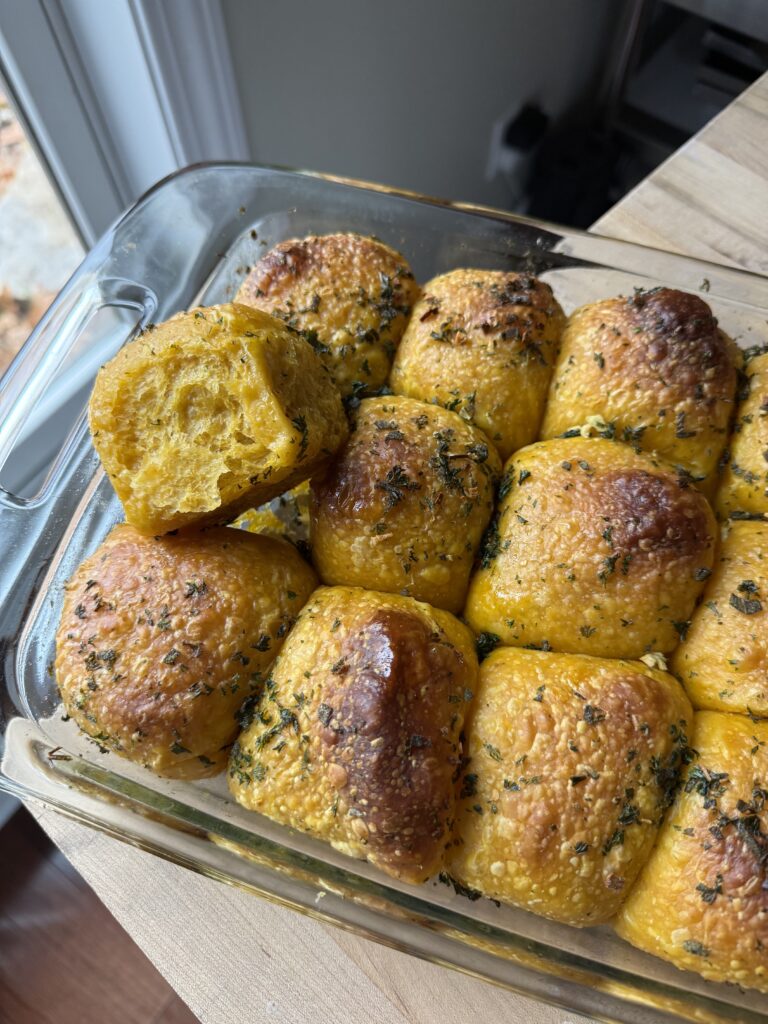
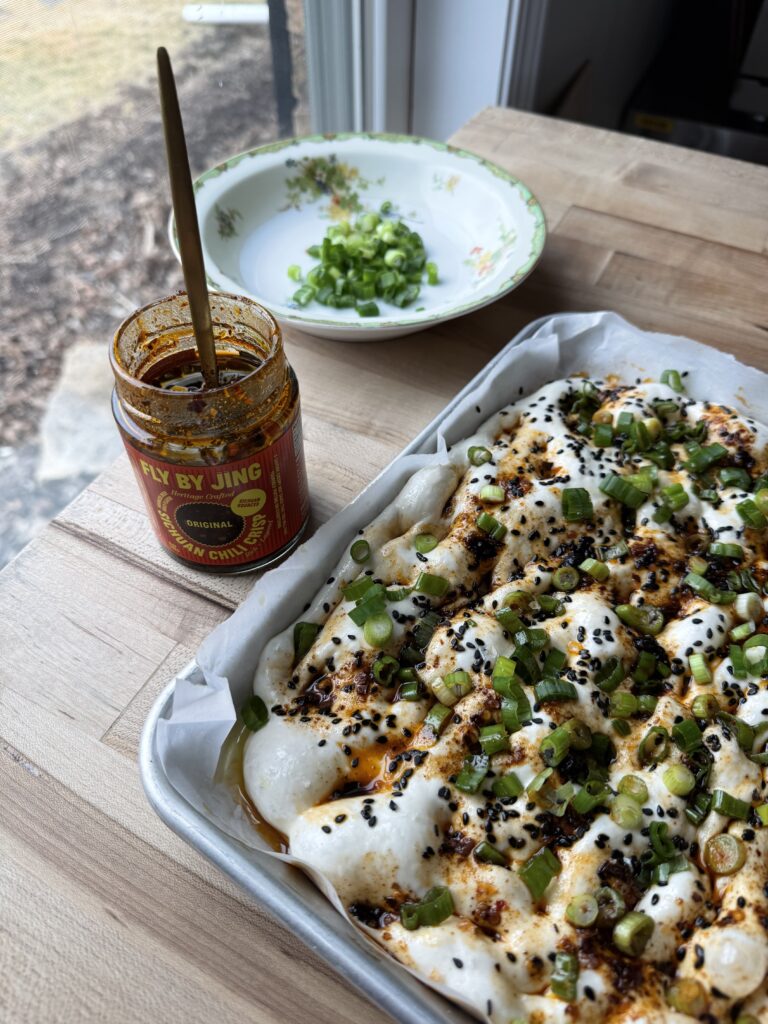
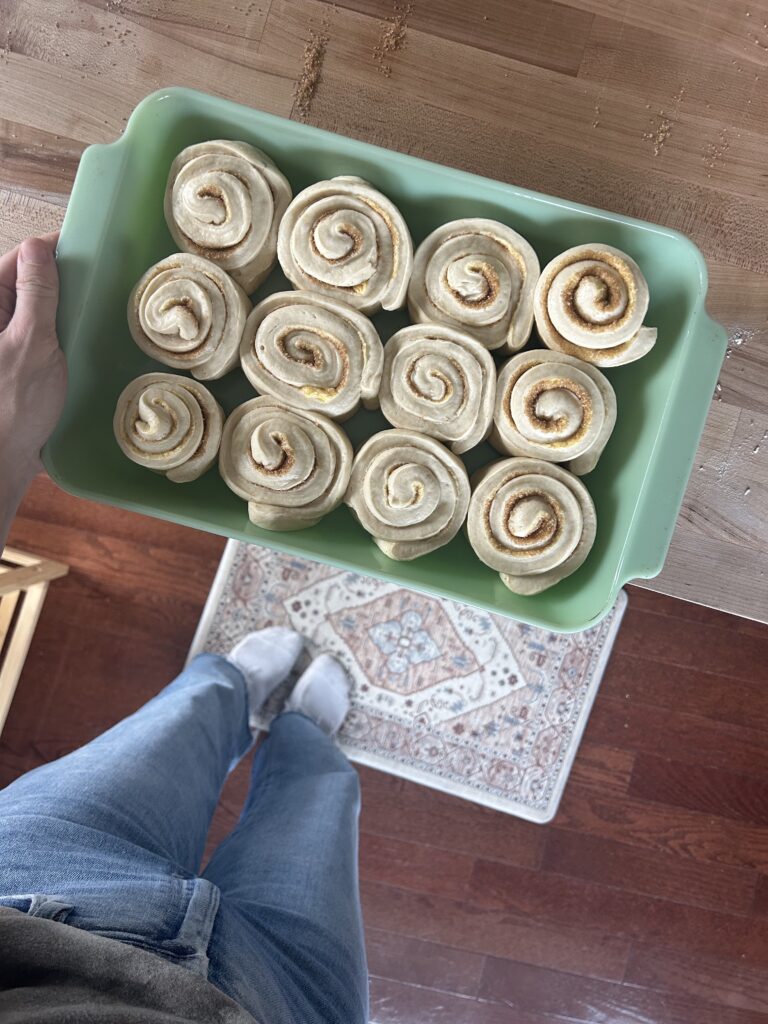
this elevated my sandwiches so much!! will definitely be making again.
Nice for a particular kind of sandwich, my go to when I want to mix it up
This takes my sandwich experience to the next level 100%
This recipe ruined any store bought ciabatta for me, nothing tastes as good as this!
Question about the hydration! So when the recipe itself says this is 78% hydration. What hydration is the starter sitting at, also?
I can’t wait to bring these to my book club.
Yum, yum, yum! Super easy recipe for an ideal sandwich bread!