Sourdough Brioche Loaf
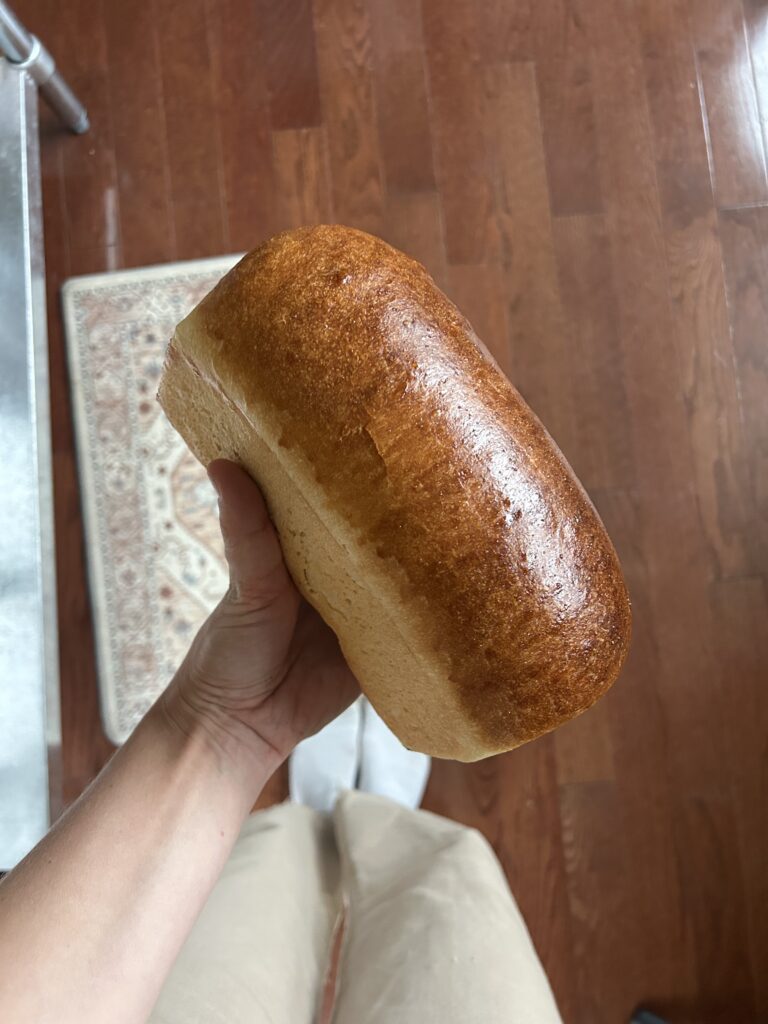
If there’s a bread that feels like a celebration in every slice, it’s brioche. Rich, tender, and slightly sweet, brioche has long been a staple in French bakeries — and now you can make it at home with your sourdough starter. This sourdough brioche loaf blends the buttery, pillowy texture of classic brioche with the depth of flavor and natural fermentation that only sourdough can bring.
Whether you’re planning a special breakfast, a decadent French toast, or just want a loaf that makes sandwiches feel gourmet, this recipe delivers.
Why Make Brioche with Sourdough?
Using sourdough instead of commercial yeast transforms the loaf in several ways:
- Deeper flavor: The slow fermentation develops complex, slightly tangy notes that balance the butter and sugar.
- Better texture: Sourdough helps maintain a light, airy crumb, even in a rich dough.
- Longer freshness: Naturally fermented dough tends to stay soft longer without preservatives.
- Beginner-friendly learning: You get all the richness of brioche without relying solely on precise yeast timing.
In short, sourdough adds both flavor and structure, making your brioche loaf even more memorable.
What Makes Brioche Special
Brioche is a rich bread, thanks to the butter, eggs, and sugar that go into the dough. The key to success is balancing enrichment with proper fermentation.
This sourdough brioche:
- Uses butter and eggs for richness
- Relies on sourdough starter for natural lift
- Produces a tender, soft crumb
- Creates a shiny, golden crust with a simple egg wash
Because of the enrichment, handling the dough gently is essential — but once you get the rhythm of stretch-and-folds and the two-stage fermentation, it’s surprisingly approachable.
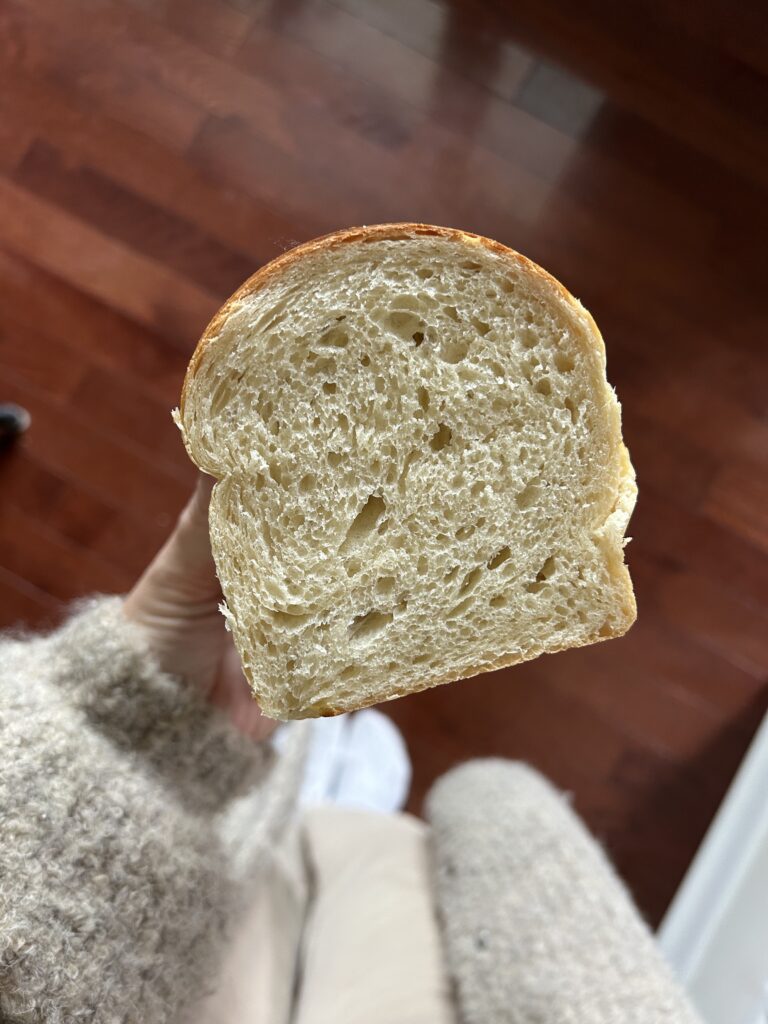
Importance of Bulk Fermentation and Second Rise
Fermentation is what makes brioche light rather than dense. A well-fermented dough should:
- Increase in volume by about 50% during bulk fermentation
- Be bubbly, soft, and slightly jiggly
- Feel elastic but not sticky
The second rise is equally important. Underproofed dough leads to a heavy loaf, while overproofed dough can collapse. Timing depends on your kitchen temperature — a warmer environment speeds up proofing, cooler slows it down. Cold fermentation is optional but adds flavor depth.
Tips for Perfect Sourdough Brioche
- Add butter gradually: This ensures it incorporates fully without breaking the dough.
- Perform stretch-and-folds: Two to three gentle sets help develop structure without toughening the dough.
- Handle gently when shaping: Avoid deflating the air bubbles.
- Use an egg wash: Brushing before baking gives a classic golden shine.
- Check internal temperature: Aim for 210°F to ensure the loaf is fully baked.
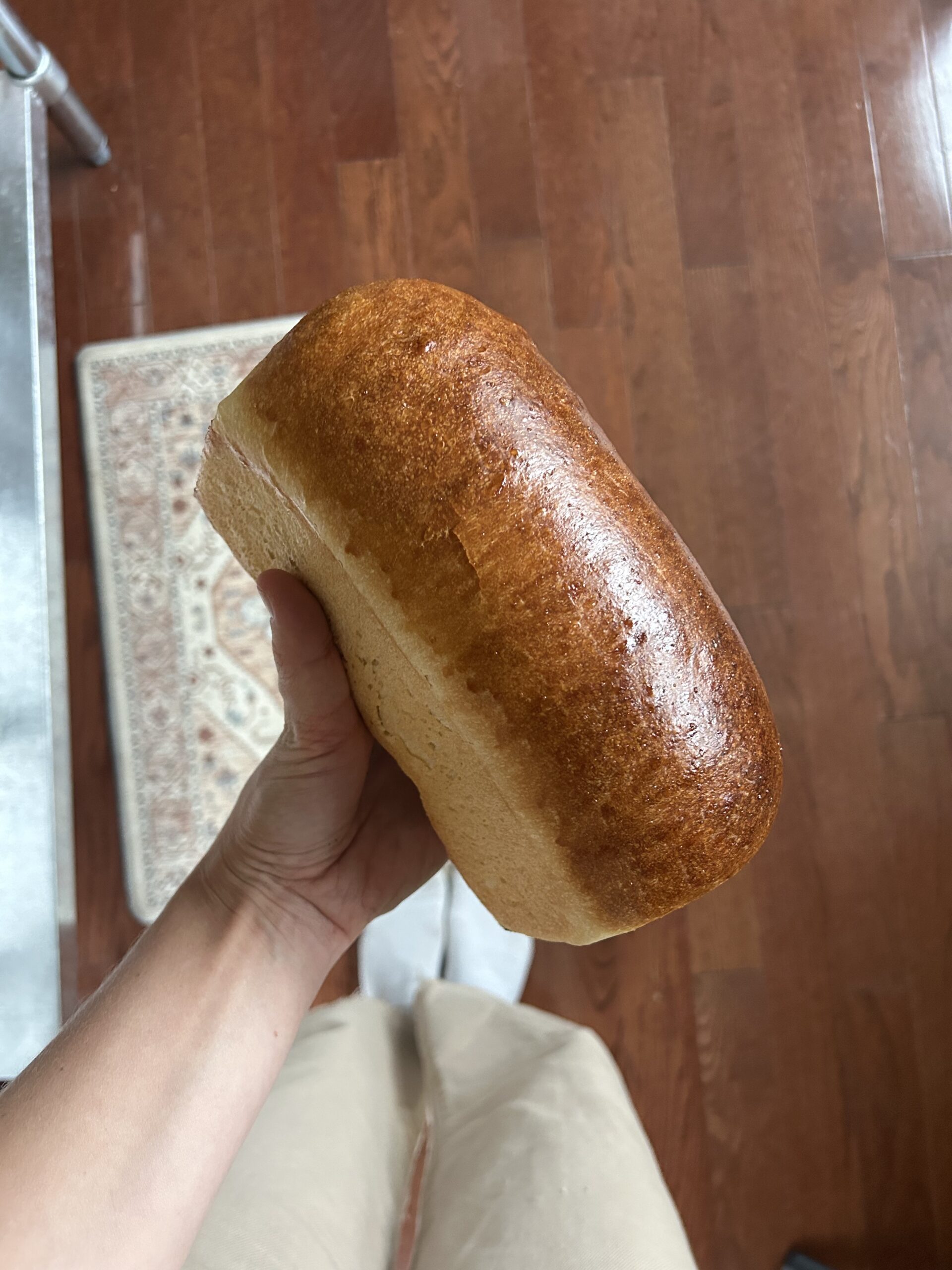
Sourdough Brioche Loaf
Ingredients
- 500 g All-Purpose Flour 4 cups
- 100 g Active Sourdough Starter ⅓ cup
- 170 g Warm Milk 1⅛ cups
- 80 g Sugar ⅔ cup
- 57 g Room Temperature Butter ½ stick
- 3 Eggs
- 6 g Salt 1 tsp
- 1 Egg for the egg wash
Instructions
MIX
- Add all of your dough ingredients to the bowl of a stand mixer, excluding the butter.
- Using the dough hook attachment, mix on low speed until everything is well combined and no dry flour remains.
- Slowly add the butter one tablespoon at a time. You know it’s time to add more butter when the last tablespoon is mostly incorporated!
- Once all the butter is added, adjust the mixer to a medium speed. Allow the dough to mix for roughly 20 minutes. You may need more or less time – You know the it is done mixing when the dough is not sticking to the bowl anymore, and it passes the windowpane test.To perform a windowpane test, grab a small portion of the dough and stretch it as thinly as possible. You should be able to stretch the dough thin enough that light will shine through it without the dough breaking.
- Scrape excess dough off the sides of the bowl and cover with a plastic cover or damp tea towel. Allow the dough to rest for 30 minutes, then perform 2 sets of stretch and folds, each 30 minutes apart.
BULK FERMENT
- Allow the dough to bulk ferment. The rise time will vary depending on the temperature of your dough and your home. You are looking for the dough to rise around 50%. In a 72°F home, that will take roughly 10 hours, starting from the moment you begin mixing your dough. Again, the dough should have gained some volume, but it will not dramatically double in size. Understanding what the dough should look like when it is fully proofed is a skill that is mastered with time.
- OPTIONAL: You may choose to cold ferment your dough in the bowl before shaping. If you cold proof, you will need to extend your second rise time significantly.
SHAPE
- Brioche dough is incredibly versatile and can be shaped in countless ways. For a classic brioche loaf, stretch the dough into a rectangular shape on a floured surface. Rolle the dough into a log and place into a greased loaf pan.
SECOND RISE
- Allow the dough to proof for an additional 2-4 hours, depending on the temperature of your environment. I recommend allowing the dough to rest in a warm spot for the second rise (in the oven with the light on works well for me). The dough should nearly double in size and be light/full of air. The second proof is essential for the perfect brioche – do NOT underproof at this stage! It will result in a dense loaf.
BAKE
- Pre-heat your oven to 400°F.
- Gently brush a layer of egg wash over the top of the loaf for a perfectly shiny finish.
- Bake for 30-40 minutes, or until the top is golen and the internal temperature reaches 210°F.
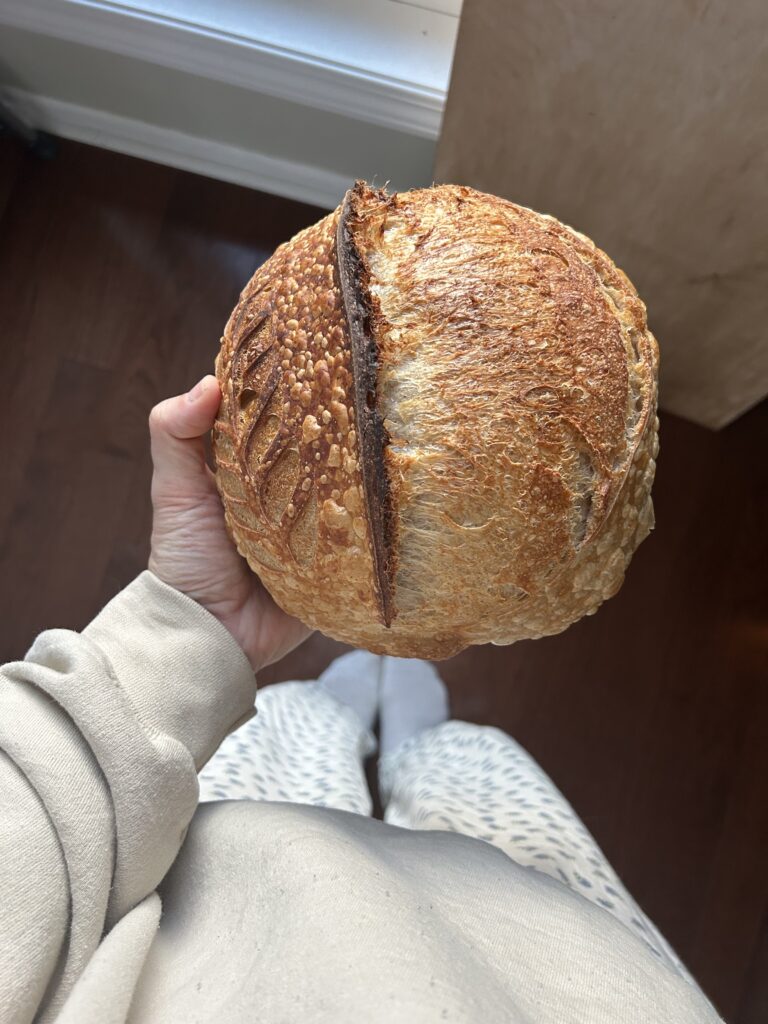
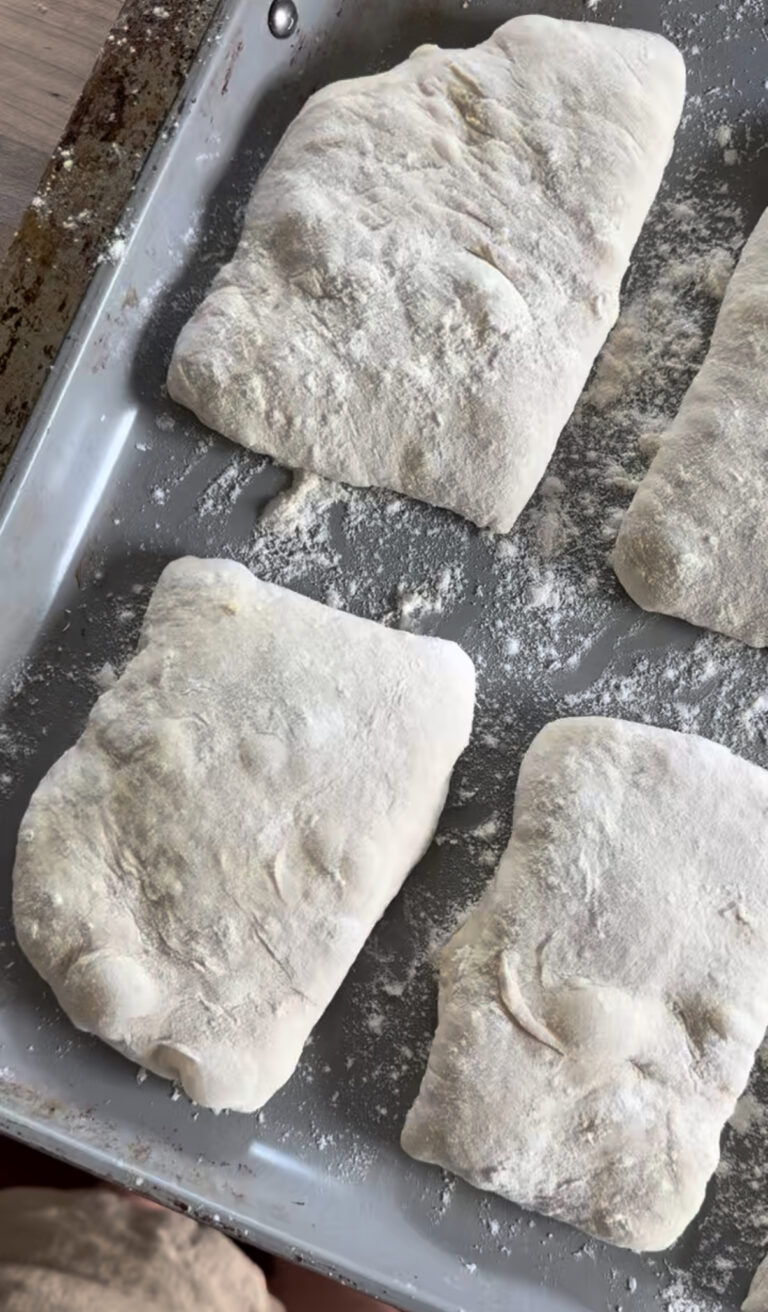
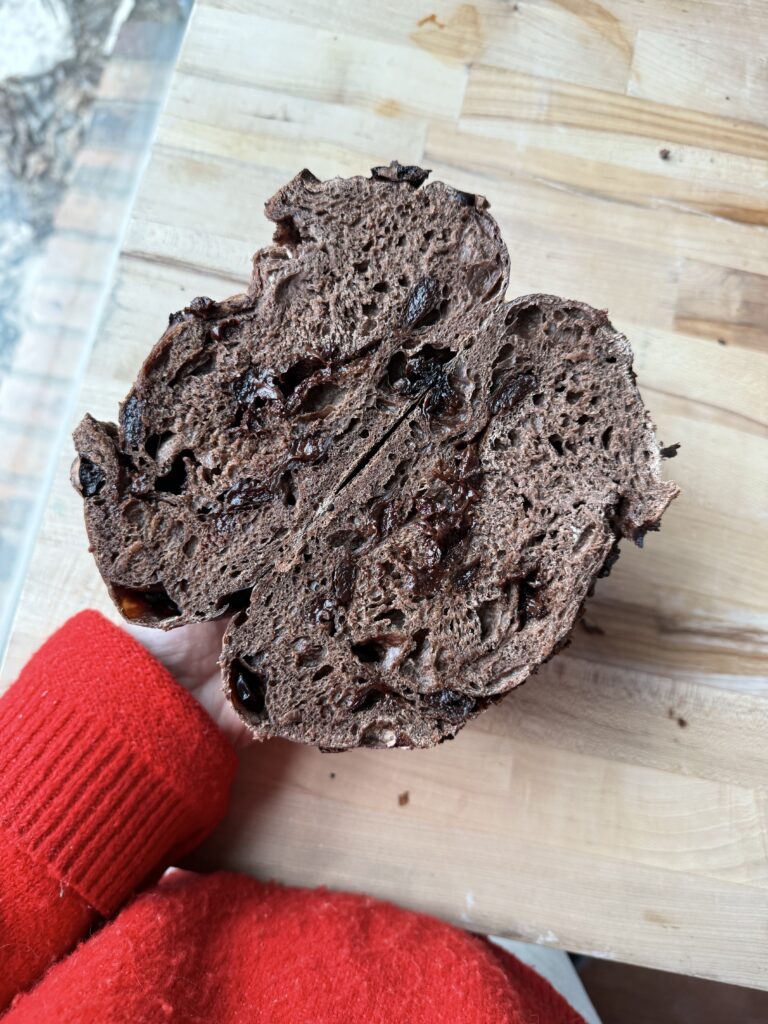
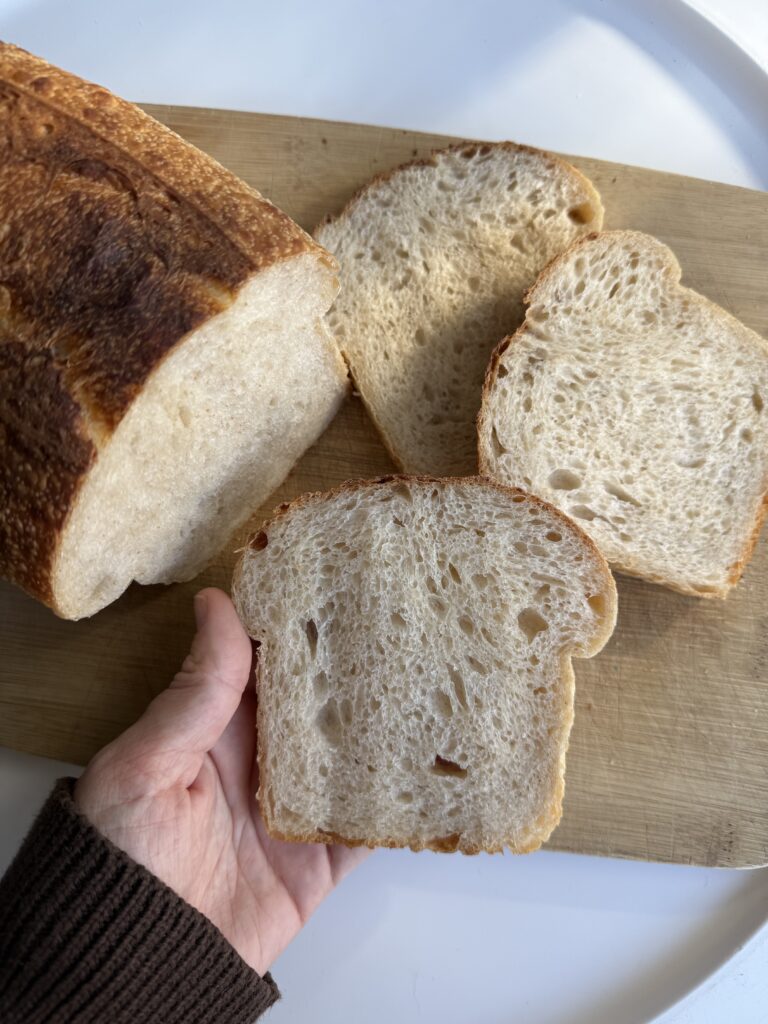

worth every second!! so buttery and fluffy!
The best brioche recipe I’ve tried!
Peak sandwich bread
The best! Such a great recipe!
I absolutely love this recipe!
I love the section explaining the importance of bulk fermentation and second rise! This turned out great!